
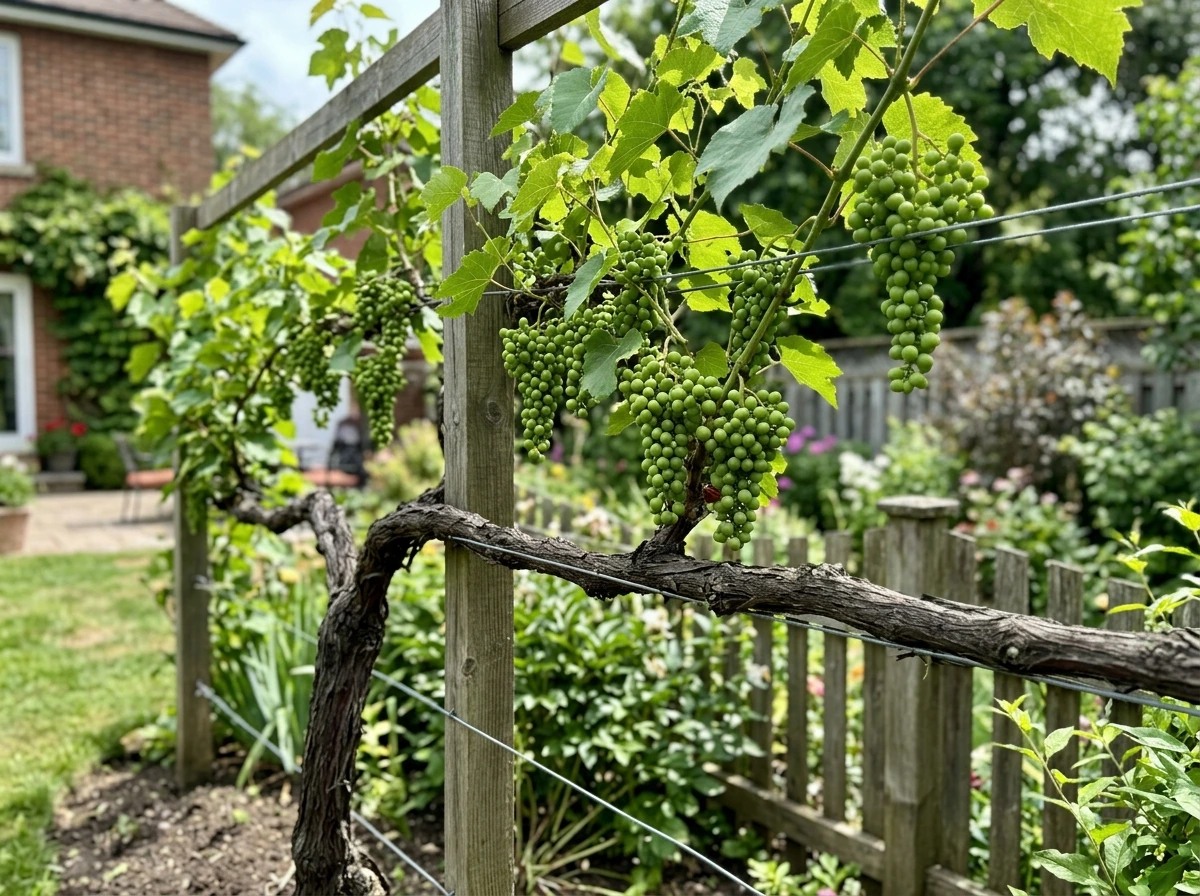
Yes, grapes grow on vines. Every grape you have ever eaten came from a grapevine, whether that vine was trained along a wire trellis in a backyard, draped over a pergola, or stretched across acres of commercial vineyard. There are no grape varieties that grow on trees or bushes in the way that, say, blueberries or apples do. If you are trying to figure out how to grow grapes at home, understanding that simple fact is actually your starting point for everything else.
Do Grapes Grow on Vines? How to Grow and Get Fruit
Marcus Whitfield
24 Mar 2026
How a Grapevine Actually Grows
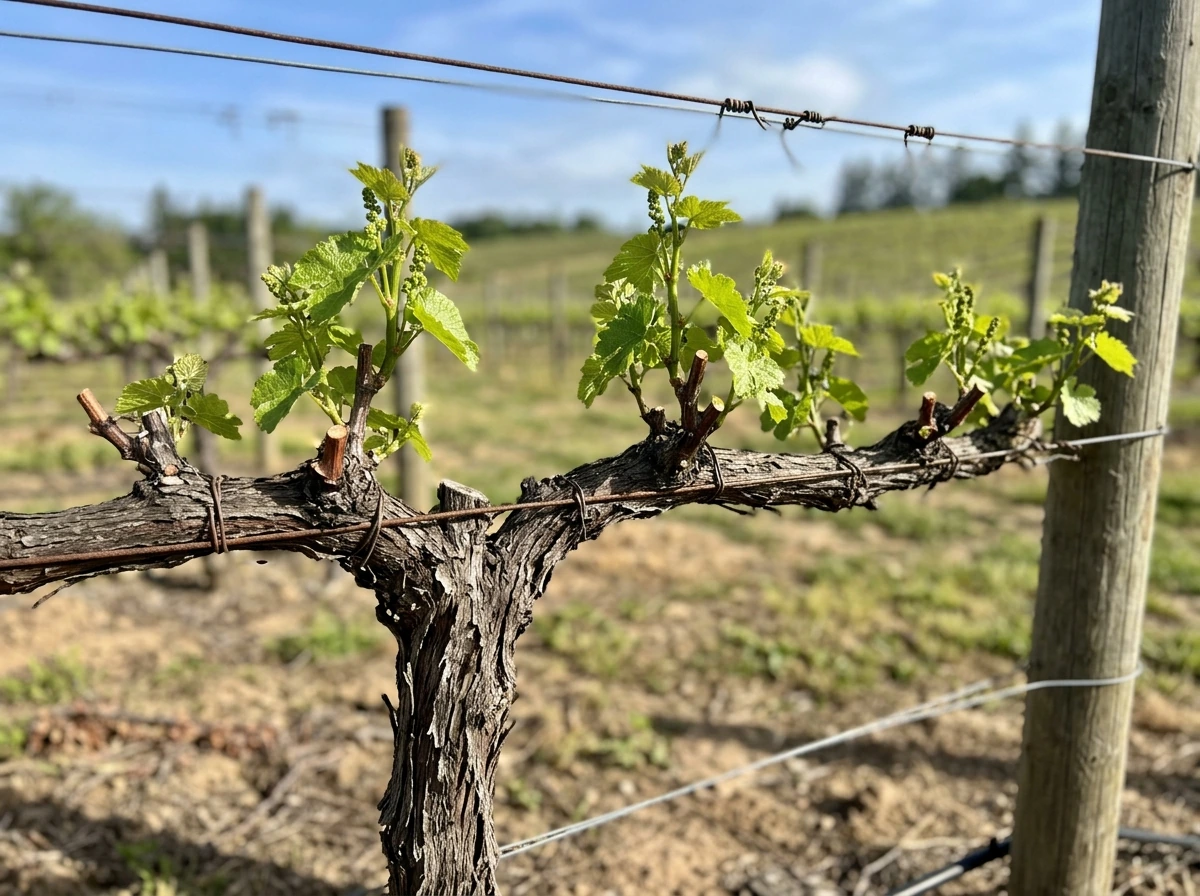
A grapevine is a woody, perennial plant. That means it builds a permanent woody structure over multiple years (the trunk and cordons, which are the horizontal arms), and then every spring it pushes out new green shoots from buds on that older wood. The fruit clusters form on those new shoots, not directly on the old trunk or arms. This is a really important distinction because it explains why pruning matters so much, and why a neglected vine often gives you a wall of leaves but no grapes.
Here is the basic anatomy of a trained grapevine. The trunk runs from the ground up to your trellis wire. From the trunk, two to four cordons (woody arms, at least two years old) extend horizontally along that wire. On those cordons sit spurs, which are short stubs of cane pruned back to just two to four buds. Each spring, those buds break and produce the current season's shoots, and it is on those shoots that grape clusters appear. After harvest, you prune most of that new growth back, retain the right spurs, and the cycle starts again.
The shoots that produced your fruit last year are not the same shoots that will produce fruit next year. Each season, fruit comes from new growth arising from buds you deliberately kept during dormant pruning. This is why UMN Extension and Penn State both hammer the point that grapes bear fruit on one-year-old wood. Grapes bear fruit on one-year-old wood.
What the clusters look like and where they sit
Grape clusters hang from the new green shoots, typically appearing within the first few nodes from where each shoot originates on the spur. A well-pruned vine with strong fruiting wood can carry several clusters per shoot. A vine that was never properly pruned tends to produce many weak shoots crowded together, most of which carry little to no fruit because the light and energy are spread too thin.
Picking the Right Grape Variety for Where You Live
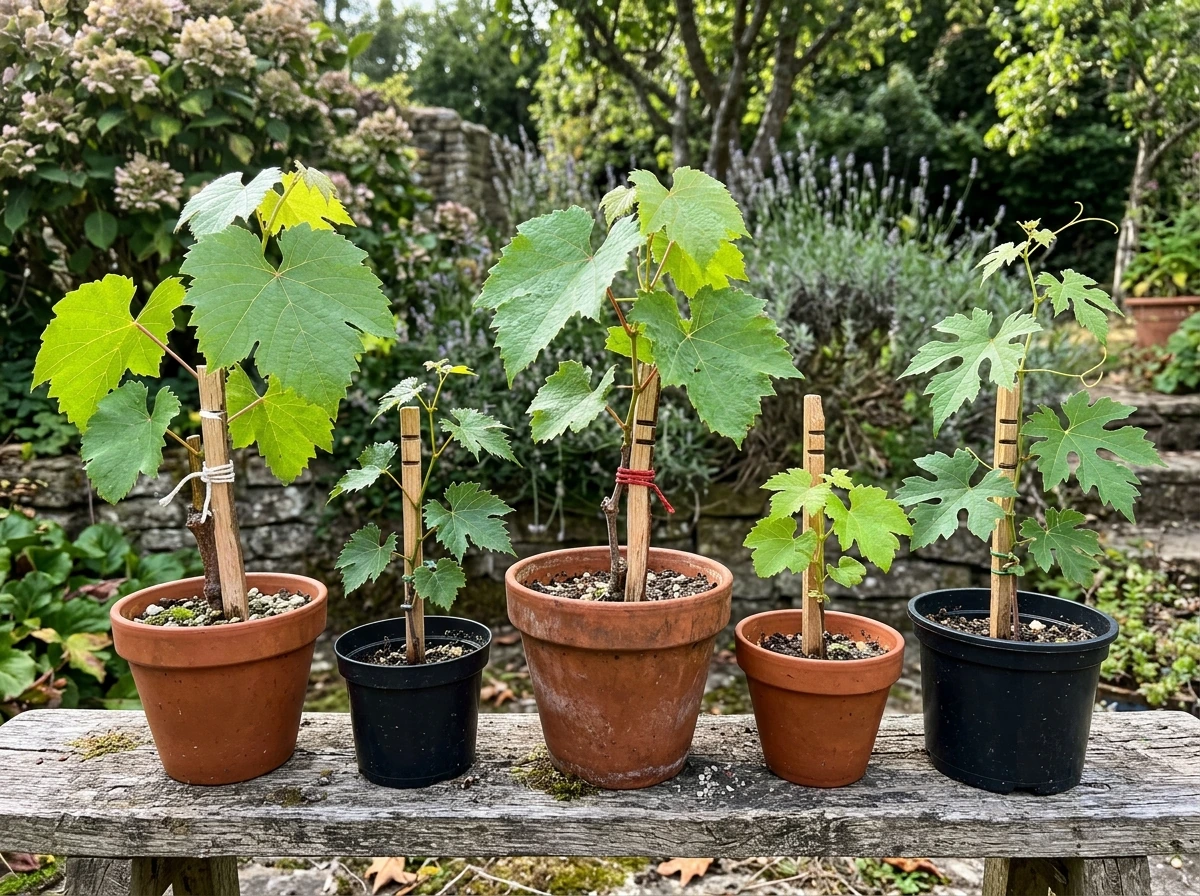
This is where most home gardeners go wrong before they even plant anything. Grapes are not a one-size-fits-all crop. The variety you choose has to match your climate, specifically your minimum winter temperature and the number of warm days you get from spring through fall. Get both of those right and grapes are genuinely not that hard. Get either one wrong and you will spend years wondering why your vine never fruits.
For a general baseline: grapes need roughly 150 frost-free days and around 2,000 growing degree days above 50°F to ripen properly. Minimum winter temperatures are equally important. Cornell's fruit-growing guidance points to roughly Zone 4b (about minus 25°F) as the practical cold threshold for many varieties. If you are in a colder zone, you need cold-hardy cultivars specifically bred for that purpose.
European varieties like Cabernet Sauvignon, Chardonnay, and most classic wine grapes are simply not cold-hardy in much of the northern US. The Wisconsin extension is blunt about this: European grapes are not suitable for Wisconsin winters. If you are in the Upper Midwest, the Great Plains, or a similarly cold region, look at cold-climate hybrids like Marquette, Frontenac, La Crescent, or Itasca, which were specifically developed to survive Zone 4 winters and still produce quality fruit.
In the South and Southwest, the challenge flips: you need varieties that handle heat, humidity, and shorter cold periods. Muscadine grapes (Vitis rotundifolia) are the go-to for the Southeast. For the Pacific Northwest and California, the range of suitable varieties widens considerably because the climate is milder and more predictable. Oregon State Extension notes that choosing early-, mid-, or late-ripening cultivars lets you match your local growing-degree-day accumulation to the variety's needs.
The practical step right now: look up your USDA Hardiness Zone and your average frost-free days. Then cross-reference that with a variety list from your state's cooperative extension service. That is not generic advice, it is genuinely the fastest path to a grape variety that will actually perform in your yard.
What Grapes Need to Thrive
Sun
Full sun, period. UMN Extension is direct about this: plant in full sun to provide the heat required to ripen fruit. Six to eight hours of direct sun is a minimum. If your site gets afternoon shade from a building or tree line, your grapes will grow but the fruit will be underwhelming at best and nonexistent at worst. South or southwest-facing slopes are ideal because they capture more heat and tend to drain cold air away from the vine.
Soil
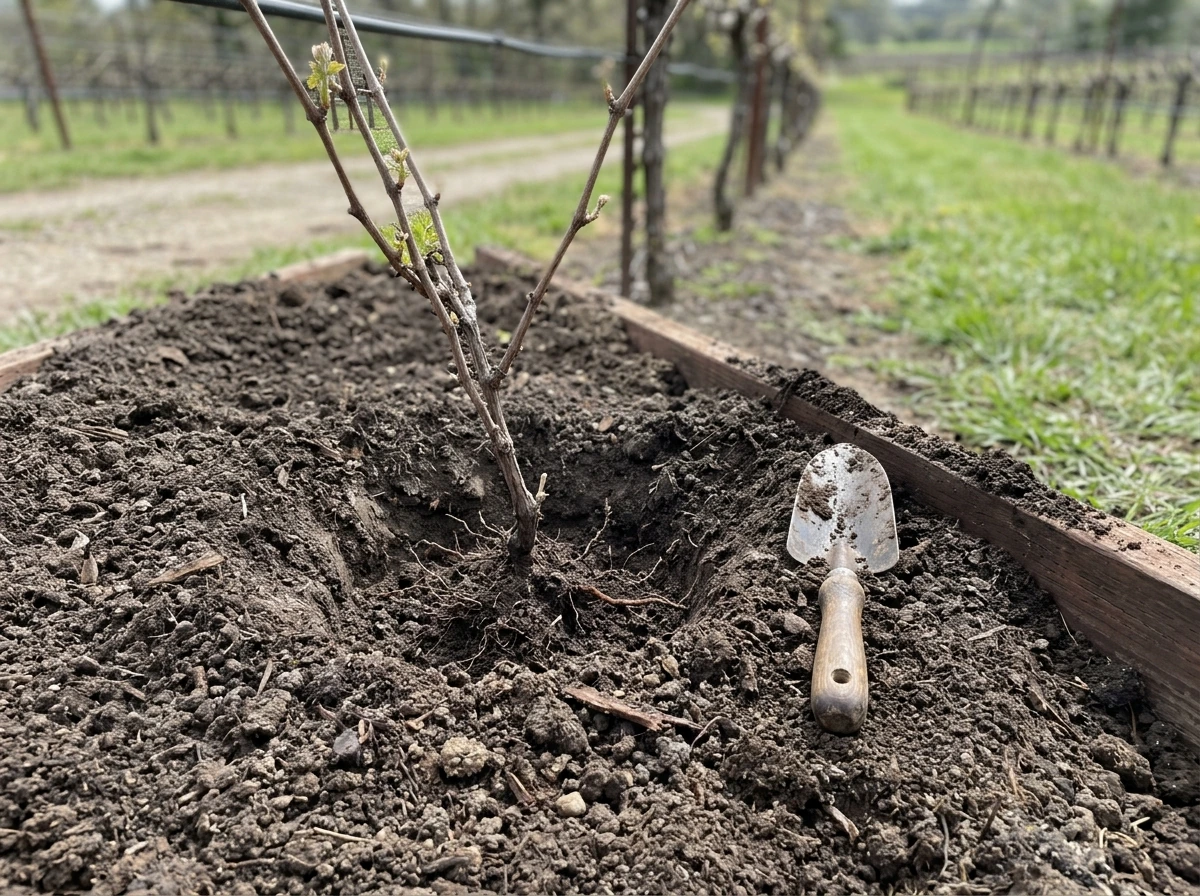
Grapes are not demanding about soil type, but they are particular about drainage and pH. Oklahoma State University Extension puts the sweet spot at a soil pH of 5.5 to 6.5, and Penn State's wine-grape guidance extends the usable range up to about 7.0 depending on variety. Get a cheap soil test before you plant. If your pH is off, correcting it before planting is far easier than trying to fix it once a vine is established. Good drainage matters more than soil richness. Grapes grown in waterlogged soil are prone to root disease, and as UC ANR notes, too much water drives excessive vegetative growth and reduces fruiting.
Water
Young vines need consistent moisture. UMN Extension recommends about half an inch to one inch of water per week for the first two years during the growing season. By the end of year two, established vines generally handle normal rainfall on their own. Oklahoma State's guidance for established vines is practical: if you have not had enough rain to wet the soil to about 12 inches deep during any two-week stretch in the growing season, water it. Do not soak it, just wet it. Overwatering is a real problem because it pushes the plant to produce leaves and shoots instead of investing in fruit.
Trellising and spacing
Grapevines need a structure to climb and spread on. UMN recommends sturdy fences, arbors, or purpose-built trellis systems. The simplest setup for a home gardener is a two-wire trellis, sometimes called the bilateral cordon or two-arm system. Missouri Extension specifically calls this system out as easy to prune, easy to harvest from, and good for air and light penetration. If you are planting multiple rows, USU Extension suggests leaving about 10 to 12 feet between rows. Within a row, most home-scale varieties do well at 6 to 8 feet apart. Training the vine properly from day one saves years of correction later.
Fertilizer
Go easy. UMN's position is essentially: maybe you do not need any fertilizer. Penn State warns that if vines are too vigorous, you should skip nitrogen for one to two years. UC ANR makes the same point: too much fertilizer causes lush leafy growth at the direct expense of fruit. If your vine looks healthy and is growing well, hold off on fertilizing and see how it does. If growth is weak or leaves look pale, do a soil or leaf test before adding anything.
How Long Before You Actually Get Grapes
Expect to wait. Grapes are not a first-season crop, and this surprises a lot of new growers. During the first year, your job is to establish the vine's root system and begin building the trunk. UMN, USU, and Missouri Extension all give the same instruction: remove any fruit clusters that form during the establishment years. Yes, even if the vine produces a small cluster, take it off. The plant needs that energy for roots and structure, not fruit.
By year two, you are typically working on training the cordons along your trellis wire and selecting spurs. Some varieties may produce a small amount of fruit in year two, but it is usually minimal. Most home gardeners see their first real harvest in year three, with the vine hitting its stride in years four and five once the cordon structure is fully established and the fruiting wood has developed properly.
| Year | What to Expect | Key Task |
|---|---|---|
| Year 1 | No fruit; establishing roots and trunk | Remove any fruit clusters; train main shoot upward |
| Year 2 | Little to no fruit; building cordons | Extend cordons along trellis wire; select spurs |
| Year 3 | First light fruit possible for some varieties | Begin spur pruning; manage shoot positioning |
| Year 4–5 | First real harvest for most varieties | Refine annual pruning; maintain fruiting wood |
Cold-climate hybrids like Frontenac and Marquette often come into production a bit faster than traditional vinifera varieties once established. Muscadines in the South can also fruit fairly early. Very cold climates may add a year to this timeline if the vine suffers any winter damage during establishment.
Why Your Grapes Might Not Be Fruiting (and What to Do About It)
If you have a grapevine that is growing well but not producing fruit, one of the following is almost certainly the reason. Go through this list systematically before giving up on the vine.
- The vine is too young: If it is in year one or two, this is normal. Remove any clusters and let it establish. Do not try to force fruit.
- Wrong variety for your climate: A European variety in a Zone 4 or 5 winter will survive some years but may lose its fruitful buds to cold injury, leaving you with vegetative regrowth and no clusters. This is the most common issue in cold states. Switch to a cold-hardy hybrid bred for your zone.
- Winter damage to buds: Even cold-hardy varieties can lose fruitful buds in an unusually harsh winter. University of Maryland Extension recommends pruning in March so you can assess winter damage before making final pruning cuts. If most buds are dead, retain more of them to compensate. Cornell's bud hardiness research supports this: testing bud viability before pruning helps you keep enough fruitful buds to get a crop.
- Not enough pruning: Insufficient pruning is one of the most common reasons home vines produce leaves but no grapes. If you have not been cutting back the previous season's canes and selecting spurs with two to four buds, your vine's energy is going into a thicket of shoots with no defined fruiting structure.
- Not enough sun: Grapes need full sun. Even partial shade pushes the plant toward vegetative growth. Reassess your site honestly.
- Too much nitrogen or water: If your vine is producing thick, dark-green canes and lots of leaves but no fruit, back off fertilizer entirely for a season or two and reduce watering. Let the plant feel a little stressed and it often redirects energy to reproduction.
- No trellis or inadequate structure: A vine piled on the ground or climbing without support produces a dense canopy that blocks light from reaching the fruiting zone. Set up a proper trellis and train the vine to it.
If you are genuinely unsure whether your vine has any fruitful buds after a cold winter, try this: cut a few buds open and look at the inside. A healthy primary bud is green and plump. A brown, shriveled interior means it was killed by cold. If the majority of your buds show cold injury, you may be growing the wrong variety for your location, and that is the root problem to solve.
Your Next Steps Right Now
If you are just starting out, the single most valuable thing you can do today is identify your USDA Hardiness Zone and look up which grape varieties your state's cooperative extension recommends for home gardeners. That narrows your choices immediately and saves you from the classic mistake of buying a pretty variety that cannot survive your winters or ripen in your summers.
If you already have a vine that is not performing, work through the troubleshooting list above in order. Start with variety and climate fit, then check your pruning habits, then evaluate sun and water. Most struggling home grapevines have a fixable problem, and the fix is usually simpler than people expect.
It is also worth knowing that grapevines do not grow in isolation from other plants in a yard. If you are thinking about where to site your vine, factors like nearby black walnut trees (which can harm grapevines through soil compounds) or other fruit trees matter for placement. Those are decisions to think through before you dig a hole. Once you have the right variety in the right spot with a solid trellis and a basic pruning plan, grapes are a genuinely rewarding crop for a home gardener, and yes, they absolutely grow on vines. can a fig tree grow in a vineyard
FAQ
Do I need two grape varieties or a pollinator vine to get fruit?
Most grapes are not self-fruitful, but unlike apples you do not manage separate “pollination” plants to get fruit. You typically get grapes as long as the vine forms and keeps fruiting buds (from proper dormant pruning and winter survival) and flowers are pollinated by wind and insects. The bigger “no fruit” causes are usually wrong variety for your winter lows, inadequate sun, or pruning that removed the one-year-old wood the clusters grow on.
Why does my grapevine grow lots of leaves but no grapes?
A vine can look vigorous and still fail to fruit if it is getting too much nitrogen or too much water. Another frequent cause is pruning mistakes, especially cutting back too far or removing the spurs that are supposed to hold the buds for next season’s shoots. If your vine grows lots of shoots but the clusters are tiny or missing, review pruning timing and reduce fertilizer, then check that your training system gives enough airflow.
What should I do if I pruned my grapes incorrectly and removed the fruiting buds?
If you accidentally prune off the spurs that would carry buds, you cannot “fix it” midseason and expect grapes the same year because the clusters develop on new shoots that arise from those retained buds. Your practical move is to follow correct dormant pruning during the next winter, keep the canopy healthy during the growing season, and avoid heavy nitrogen so you do not build excessive vegetative growth while you wait for the next crop cycle.
Are grapes from home vines safe to eat, and how do I know when they are ripe enough?
You can eat grapes from a backyard vine, but you should still treat the harvest and ripeness carefully. Taste is the best cue because sugar levels track variety and heat more than calendar time. Also, remove any diseased or split berries early, because clusters left to rot can increase pressure from fungal problems later.
How can I tell whether winter damage is the reason my grapes did not fruit?
If your winter kills back the vine above ground, the outcome depends on where the damage happened. Bud-kill will reduce or eliminate fruit, but a surviving trunk and cordons can regrow new wood for later seasons. If the trunk or graft area is damaged, you may need to re-establish the framework, which can delay production by a year or more compared with healthy vines.
Can grapes grow on vines in pots, and what changes compared with planting in the ground?
Yes, you can grow grapes in containers, but the main constraints are root volume, consistent watering, and winter protection. Use a large container (small pots often lead to water stress and weak growth), ensure excellent drainage, and plan to protect the roots from freezing because potted plants cool faster than ground soil.
Will afternoon shade ruin grape production, or can I still get decent fruit?
Planting too close to shade sources is one of the most common “it grows but never ripens” problems. If you can only get part-day sun, position the vine where it gets the most consistent direct light, and consider pruning nearby canopy trees or relocating. Even a few hours short of direct sun can reduce sugar buildup and lead to sour, underdeveloped fruit.
My soil test pH is slightly off. Should I correct it now, or can I wait?
Grapes can tolerate a range of soil types as long as drainage is good, but the pH affects nutrient availability and can influence vigor and fruit quality. If you correct pH after planting, it is slower and more difficult than correcting before, so re-test when troubleshooting persistent poor performance. If you suspect salinity or compacted soil, improve drainage and avoid repeated overwatering rather than adding more fertilizer.
How do I protect grape clusters from birds without harming the vine?
If bird pressure is high, netting is usually more effective than relying on deterrents that fade quickly. Install netting over the trellis before berries fully soften, and make sure it does not sag onto clusters where trapped birds can still peck. For smaller gardens, bagging individual clusters can also work and lets you avoid covering the entire vine area.
Can I prune grapes in summer to control size and still get a good harvest?
It is best to avoid heavy pruning during the growing season unless you are removing obvious dead or diseased shoots. Excessive summer pruning can reduce leaf area needed for ripening, and it can disrupt the balance between fruit and canopy. Focus on training during dormant season and use summer cuts only for canopy management when necessary for airflow and light.