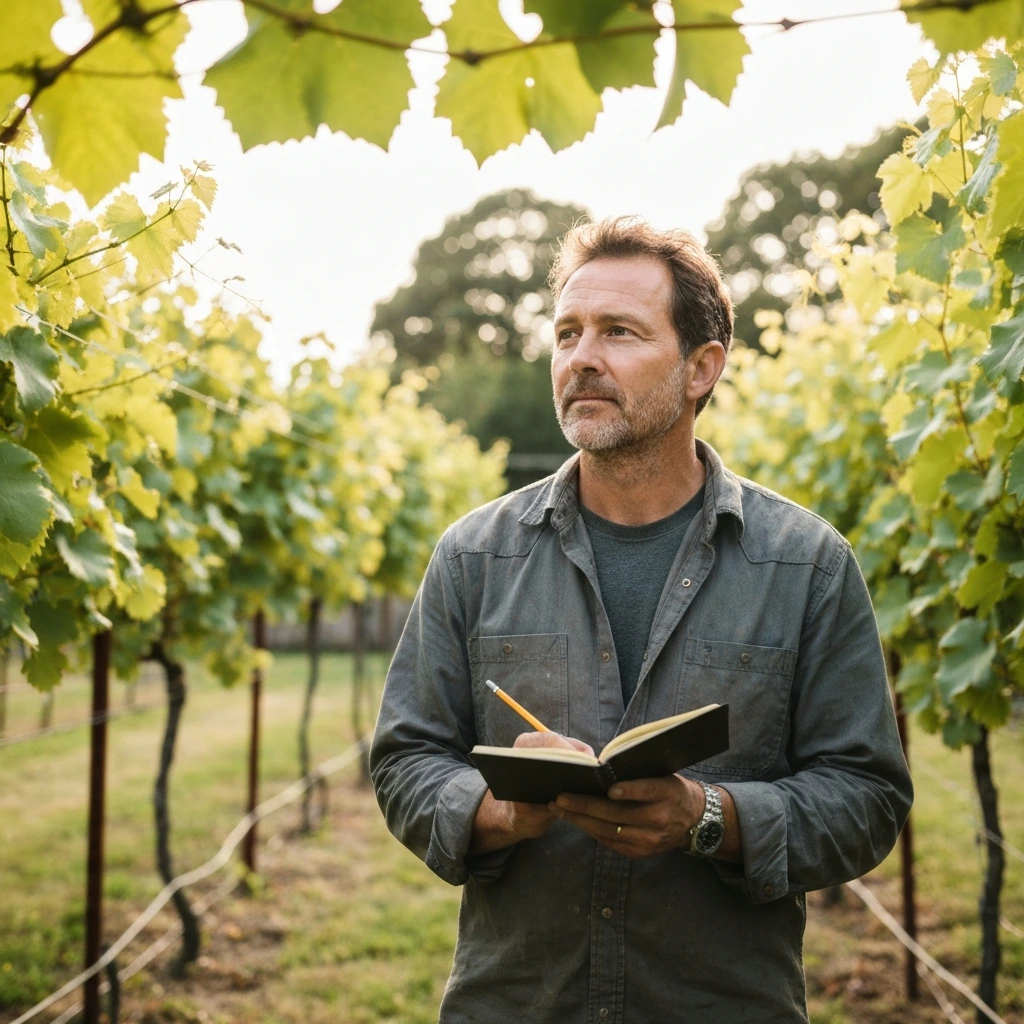
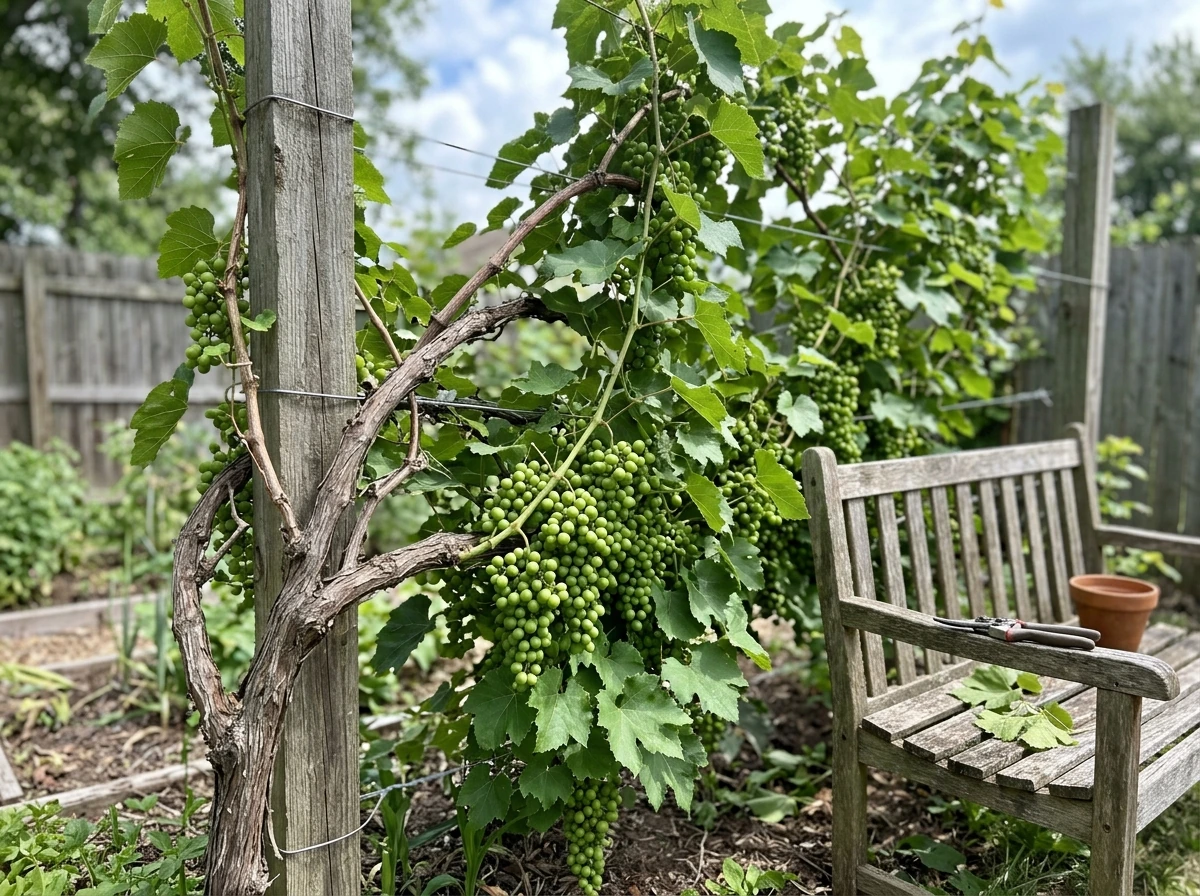
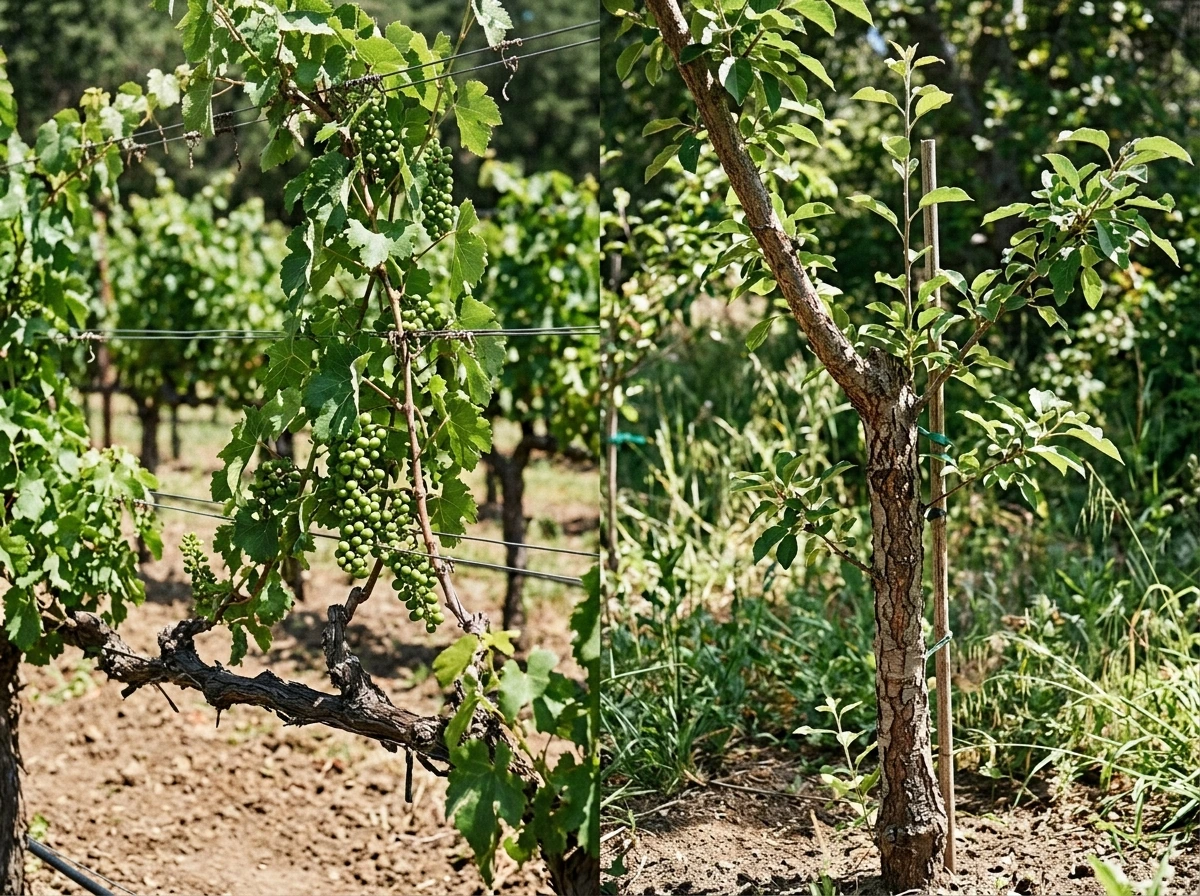
Where the confusion comes from is pretty understandable. A mature, well-trained grapevine can look impressively tree-like. If someone prunes a vine into what horticulturalists call a "standard" form, you end up with a clear single stem topped by a rounded head of foliage and fruit. The Royal Horticultural Society actually describes this training method as giving the vine a lollipop-like silhouette. It still needs annual pruning, it still grows on a support structure, and it is still 100% a vine. Similarly, if you let a grapevine climb into a large tree or over a pergola for a few years, the thick, gnarled woody base can start to resemble a small tree trunk. But that's trained and managed vine growth, not a tree.
The vine's structure has two main parts worth understanding: the permanent older wood (the trunk and main arms, called cordons) and the younger wood that actually produces fruit. Fruit comes from buds that developed the previous year, carried on one-year-old canes or renewal spurs. Every dormant season you prune away old wood and position next season's fruiting canes. That annual renewal cycle is completely different from how a fruit tree grows, and it's one of the reasons grapevines are so sensitive to pruning decisions.
If you're wondering about related questions like [whether grapes grow on bushes], or whether grapes fruit on new or old wood, those are worth looking into separately. But the short answer to the tree question is: vines, always vines. do grapes grow on vines. can a fig tree grow in a vineyard
Why people think grapes grow on trees in different climates
The "trees or vines" confusion gets amplified by regional differences in how grapevines are grown and trained. In warm Mediterranean climates like coastal California or parts of Spain, commercial vineyards sometimes use a head-trained, free-standing system where vines stand without a trellis and develop a short, stubby trunk that genuinely looks like a small shrub or tree from a distance. In cooler climates like the Pacific Northwest or the Upper Midwest, growers often train vines tightly along wire trellises because they need to manage cold exposure and maximize sunlight absorption. Same plant, very different silhouette.
Missouri Extension outlines several training systems, including bilateral cordon (two horizontal arms along wires), fan systems for walls and fences, and arbor-based training. All of them can create shapes that look quite structural and woody in the landscape, especially in winter when the leaves are gone. But every system still relies on annual pruning and a support structure of some kind, whether that's a post-and-wire trellis, a fence, or a pergola.
The climate affects training method more than most beginners realize. In a short-season cold climate, you need to be strategic about where you position fruiting canes because the vine has a narrow window to ripen fruit. In a long warm-season climate, you have more flexibility, but heat management and water become the limiting factors instead. The vines don't turn into trees in one climate and stay vines in another. They just get trained differently to handle what the weather throws at them.
Where grapes actually grow well
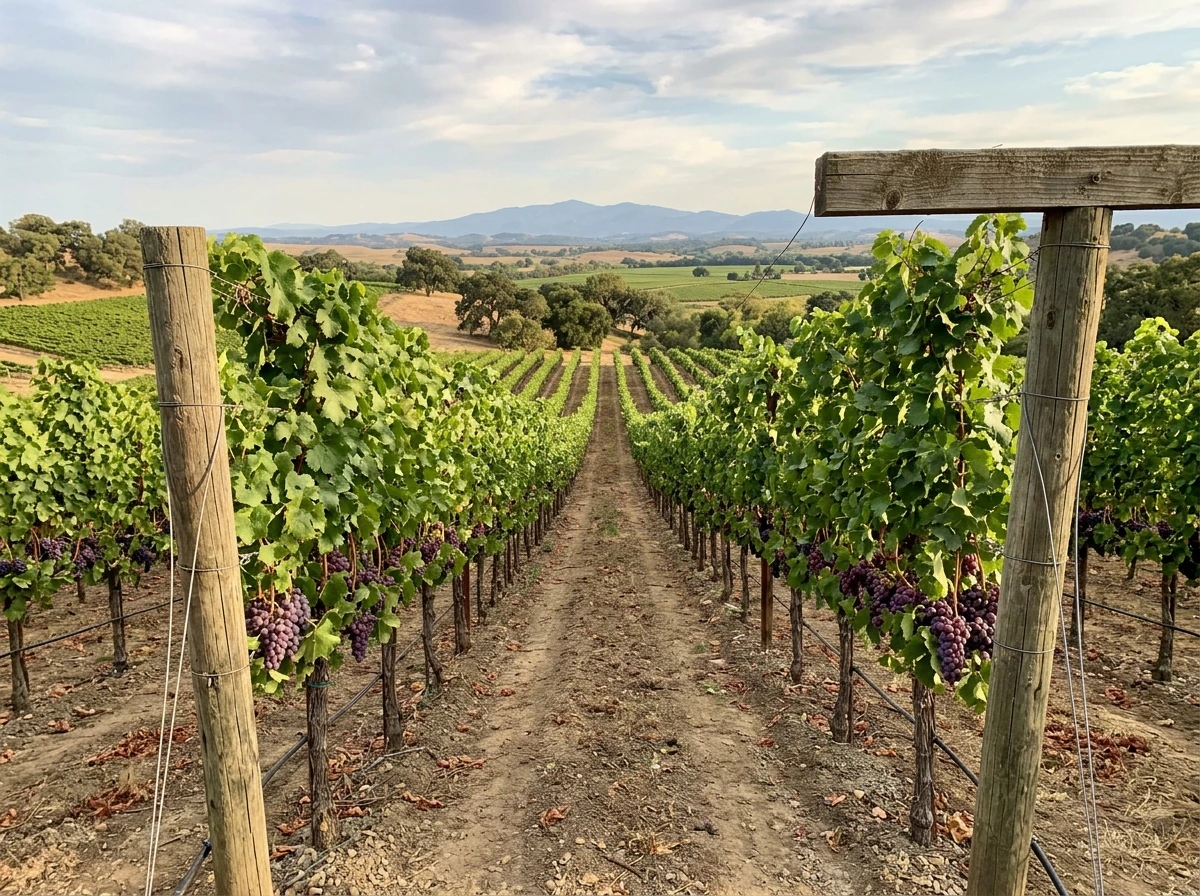
Grapevines are grown on every permanently inhabited continent, which gives people the impression they'll grow anywhere. That's not quite right for home gardeners. The regions where grapes thrive share a few consistent characteristics: enough summer heat to ripen fruit, enough winter cold to satisfy dormancy requirements (chilling hours typically in the 100 to 600 range depending on cultivar), and enough of a frost-free window between late spring and early fall.
In the United States, the broadest commercially and home-gardening-viable regions include the Pacific Coast states (especially California, Oregon, and Washington), the Mid-Atlantic and Southeast, the Midwest with cold-hardy hybrid varieties, and parts of the South and Southwest with heat-tolerant cultivars. What changes region to region is which varieties are realistic and how much winter protection you might need to provide.
Oregon State University Extension uses growing degree days (GDD) as a practical tool for matching cultivars to climates. Cool-climate grapes (like many hybrid varieties developed at the University of Minnesota) need fewer GDDs to ripen. Warm- and hot-climate varieties like most Vitis vinifera cultivars (Chardonnay, Cabernet Sauvignon, Thompson Seedless) need substantially more heat accumulation through the season. If your summers don't deliver enough GDDs, those varieties simply won't ripen properly before frost hits. UC ANR is blunt about this: grapes don't ripen off the vine, so if you can't get them ripe on the plant, you're stuck with sour fruit.
Humidity is the other major regional variable. In the humid Southeast, Mid-South, and parts of the Midwest, fungal diseases like black rot, downy mildew, and powdery mildew can devastate an unprotected planting. Oklahoma State University Extension recommends prioritizing disease-resistant varieties in humid climates even if a more susceptible variety sounds appealing for flavor or use. Wet summers combined with susceptible varieties is a recipe for frustration, especially for first-time growers.
Can grapes grow where you live? Run through this checklist
Before you buy a single vine, go through these practical questions for your specific location. This isn't about scaring you off; most parts of the continental US can grow some type of grape. The goal is matching reality to expectations from day one.
- What is your USDA hardiness zone, and what are your average winter low temperatures? Vitis vinifera varieties generally need zone 7 or warmer without serious winter protection. Cold-hardy hybrids (Marquette, Frontenac, La Crescent, Itasca, and similar University of Minnesota releases) can handle zone 4 and sometimes zone 3 conditions.
- How many growing degree days does your area accumulate between your last spring frost and first fall frost? Cool-climate cultivars ripen in roughly 2,500 to 3,000 GDDs. Most vinifera varieties need well over 3,000 GDDs. If you're in a short-season climate like Minnesota or northern New England, this is the single biggest constraint.
- What is your typical summer humidity level? High humidity combined with warm temperatures creates prime conditions for fungal disease. If you're in the Southeast, Gulf Coast, or humid Midwest, you need disease-resistant varieties or a solid spray program.
- Do you have at least 6 to 8 hours of direct sun on your proposed planting site? Full sun is non-negotiable for fruit quality and disease control. Shaded sites produce weak vines and rarely ripen fruit well.
- Do you have room for a trellis, arbor, fence, or post-and-wire system? Grapes need support. Oklahoma State University Extension is clear that annual pruning and trellising are required, not optional.
- What is your soil drainage like? Grapevines hate waterlogged roots. Well-drained soil, even on a slight slope, is far better than flat, heavy clay that holds water.
If you can check off sun, support structure, decent drainage, and a cultivar that fits your winter cold and season length, you're in a good position to succeed. If two or more of these are serious problems, address them before planting, not after.
Do green grapes grow differently than other types?
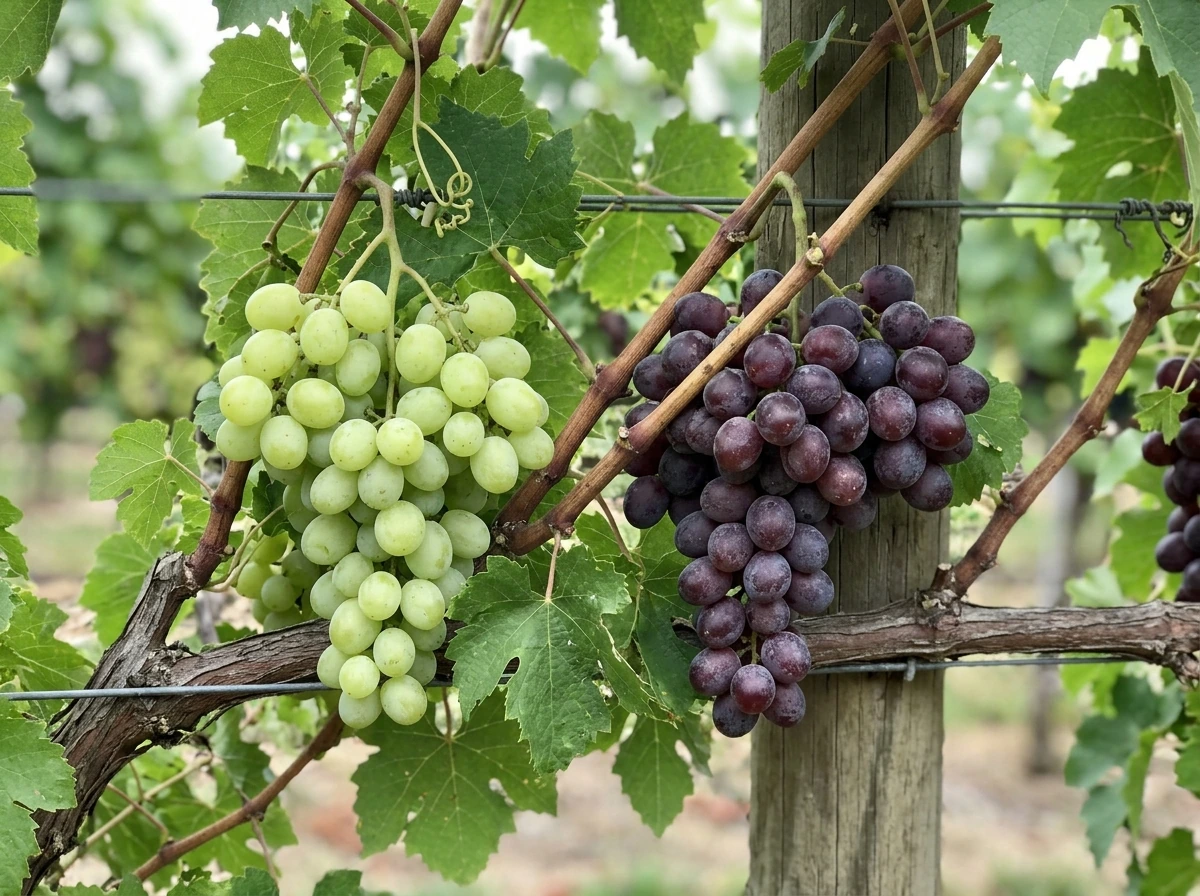
This comes up a lot, especially from people who saw "green grapes" on a product label or in a recipe and want to know if they need a different kind of plant. The answer is no. Green grapes, red grapes, blue-black grapes, and everything in between all grow on vines using exactly the same biology. Skin color is determined by genetics, not by how the vine grows, where it's trained, or what climate it prefers.
The traits that actually determine whether a specific grape will work in your location are cold hardiness, disease resistance, heat requirement for ripening, and days to maturity. These vary enormously within each color category. A green seedless table grape like Himrod can handle zone 5 winters reasonably well. Thompson Seedless, also green, is essentially a California grape that needs long hot summers and can't survive serious cold winters without protection. UMass Extension's seedless table grape variety list includes cultivars across hardiness ranges, and their skin color isn't the useful sorting criteria, their winter hardiness rating and disease susceptibility are.
So if someone asks you whether green grapes grow on trees, the answer is the same as for any grape: they grow on vines, and what matters for your garden isn't their color but whether the specific cultivar matches your climate.
Picking the right variety for your home planting
Variety selection is where most beginner grape growers either set themselves up for success or for years of disappointing harvests. Illinois Extension sums it up well: choose for cold hardiness first, disease resistance second, and then consider flavor, use (table vs wine), and maturity timing. That order matters.
Cold climates (zones 3 to 5, Upper Midwest, northern plains, New England)
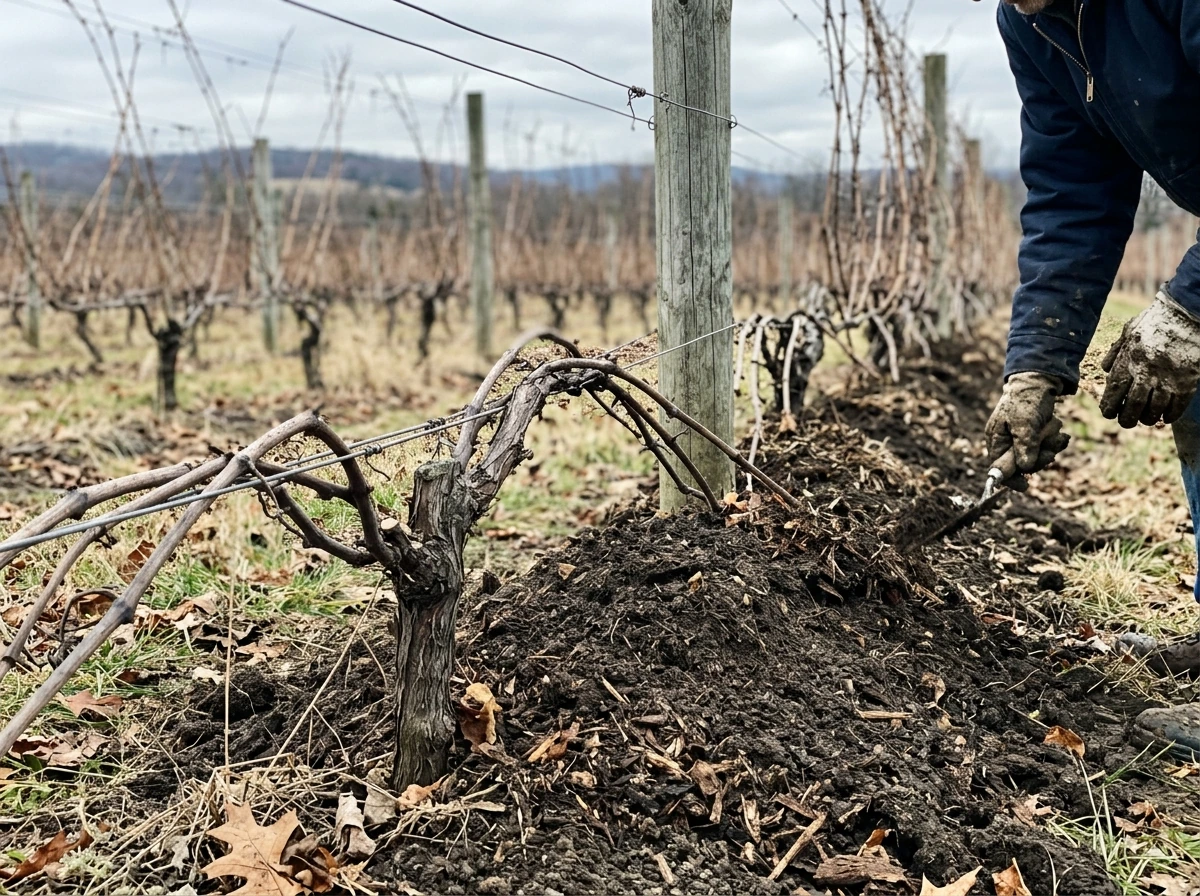
University of Minnesota Extension is direct about this: standard Vitis vinifera varieties will not reliably survive cold winters in these zones without burying vines each fall, which is labor-intensive enough to be unrealistic for most home gardeners. The cold-hardy hybrid breeding programs at UMN have produced varieties that changed the picture significantly. Marquette, Frontenac, La Crescent, Itasca, and Crimson Pearl are worth researching for your specific zone. These were bred to handle brutal winters and shorter seasons without sacrificing too much on fruit quality.
Transition zones (zones 6 to 7, Mid-Atlantic, Midwest, parts of the South)
In these zones you have more options but also more disease pressure in humid years. Penn State Extension notes that European vinifera varieties have excellent flavor but more disease vulnerability, so they require more active management. Hybrid varieties like Chambourcin, Vidal Blanc, Traminette, and Niagara give you better disease resistance with quality that's genuinely good for home use. If you're committed to growing vinifera, plant disease-resistant rootstocks and be prepared to manage a spray schedule.
Warm climates (zones 7 to 9, Pacific Coast, Southwest, Southeast)
This is where Vitis vinifera varieties like Thompson Seedless, Flame Seedless, Chardonnay, and Cabernet Sauvignon actually perform as advertised. Washington State University tracks cold hardiness data by cultivar, but in zone 8 and 9 winters, cold injury becomes much less of a concern. Heat accumulation and water management take over as the main challenges. In the humid Southeast, Muscadine grapes (Vitis rotundifolia, varieties like Carlos, Noble, Ison) are worth serious consideration since they're naturally adapted to that climate and highly disease resistant.
A quick variety comparison by climate
| Variety | Type | Best Climate/Zone | Cold Hardiness | Disease Resistance | Best Use |
|---|
| Marquette | Cold-hardy hybrid | Zones 3-5 (Upper Midwest) | Excellent (to -30°F) | Good | Red wine |
| Frontenac | Cold-hardy hybrid | Zones 3-5 (Upper Midwest) | Excellent (to -30°F) | Good | Red wine/juice |
| Itasca | Cold-hardy hybrid | Zones 4-6 | Very good | Good | White wine/table |
| Concord | Native American hybrid | Zones 4-7 | Very good | Good | Juice/table/jam |
| Niagara | Native American hybrid | Zones 5-7 | Good | Fair-Good | Table/white wine |
| Chambourcin | French-American hybrid | Zones 5-8 | Good | Very good | Red wine |
| Traminette | French-American hybrid | Zones 5-8 | Good | Very good | White wine |
| Vidal Blanc | French-American hybrid | Zones 5-8 | Good | Good | White wine |
| Thompson Seedless | Vitis vinifera | Zones 7-9 (California) | Poor | Fair | Table/raisins |
| Flame Seedless | Vitis vinifera | Zones 7-9 | Poor | Fair | Table |
| Chardonnay | Vitis vinifera | Zones 6-9 (warm, dry) | Poor | Poor | White wine |
| Carlos (Muscadine) | Vitis rotundifolia | Zones 7-9 (Southeast) | Fair | Excellent | Table/wine/juice |
| Noble (Muscadine) | Vitis rotundifolia | Zones 7-9 (Southeast) | Fair | Excellent | Red wine/juice |
Practical next steps to get started
You now know that grapes grow on vines, that the vine's "tree-like" appearance in some training systems is a function of pruning and support structure rather than actual tree biology, and that your climate zone and season length are the real filters for what you can realistically grow. Here's how to move from reading to planting:
- Look up your USDA hardiness zone and your average last spring frost and first fall frost dates. These two pieces of information will eliminate most of the guesswork about variety selection.
- Choose two or three candidate varieties based on your zone using the table above and any additional guidance from your state's cooperative extension service. Start with disease-resistant options if you're in a humid climate.
- Pick your planting site before you order vines. Full sun, well-drained soil, and room for a trellis or arbor are the minimum requirements. A south-facing slope with good air circulation is ideal.
- Plan your support structure before or right at planting time. A basic two-wire post-and-wire trellis works for most home plantings. Oklahoma State University Extension recommends having this in place before the vine needs it, not scrambled together after.
- Plant bare-root vines in early spring when the soil can be worked and temperatures are consistently above freezing. Most extension services recommend pruning the vine back hard at planting to one or two strong canes, which feels counterintuitive but sets the vine up for the right framework from the start.
- Accept that year one and year two are establishment years. Fruit production typically begins in year three, with full yields coming in years four and five. This is normal, not a sign that something is wrong.
If you're also thinking about what else can share space near your grapevines, it's worth knowing that some plants don't play well with grapes. Black walnut trees, for example, are one of the more well-known compatibility concerns for nearby plantings, and that's a separate topic worth looking into before you finalize your garden layout (can grapes grow near black walnut trees).
Growing grapes at home is genuinely achievable if you match the variety to your climate and give the vine the support and annual pruning it needs. The biology is straightforward once you stop thinking about trees and start thinking about trained, managed vines. Get the variety right, build a trellis, and be patient through the first couple of establishment years. The payoff is worth it.