
Grapes grow on vines, and those vines grow on a structure you build for them: most commonly a trellis made of posts and wires. That is the short answer. The longer answer is that the type of structure you choose, what you plant nearby, and how you set everything up in your specific climate will determine whether your vines thrive or just survive. This guide walks you through all of it, from picking the right trellis materials to choosing smart companion plants, so you can make confident decisions today.
What Do Grapes Grow On Trellis and Companion Guide
Marcus Whitfield
24 Mar 2026
Why grapes need a trellis (and what the vine actually does with it)
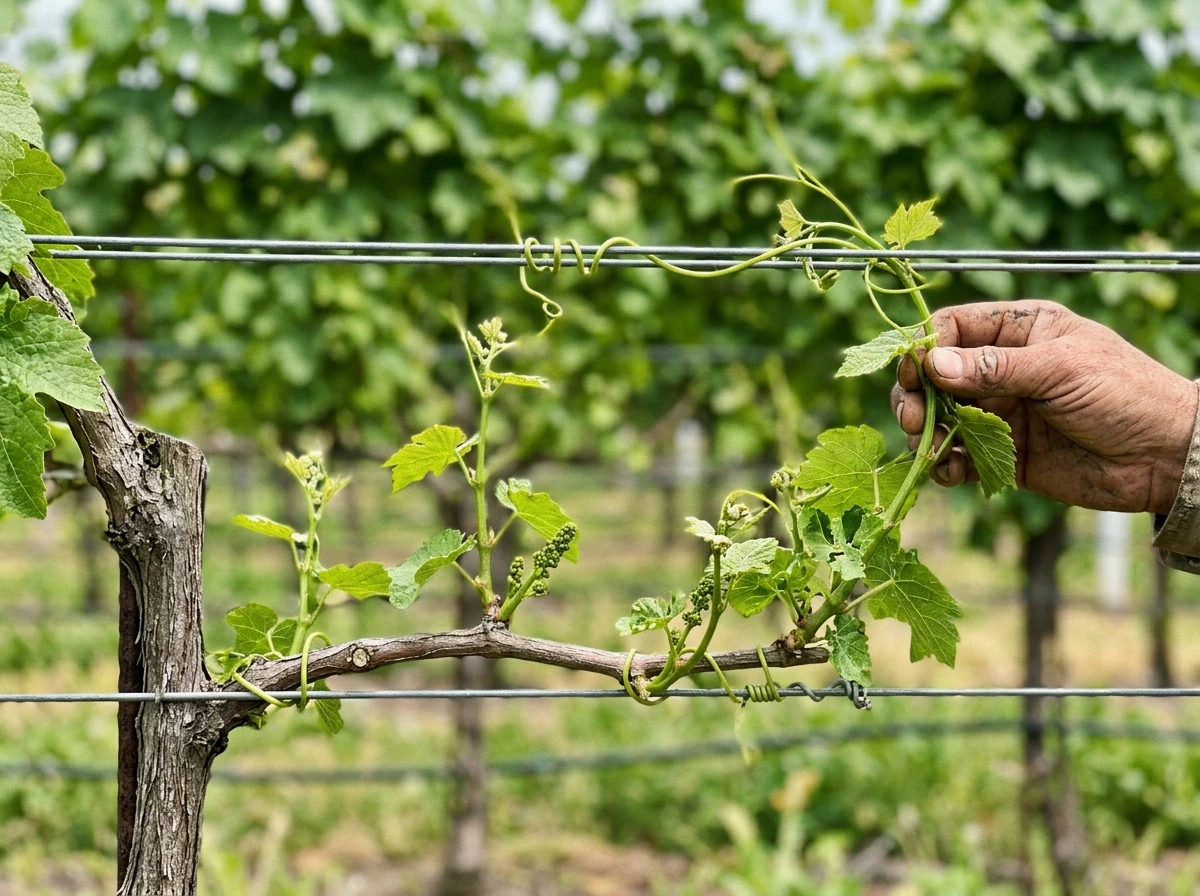
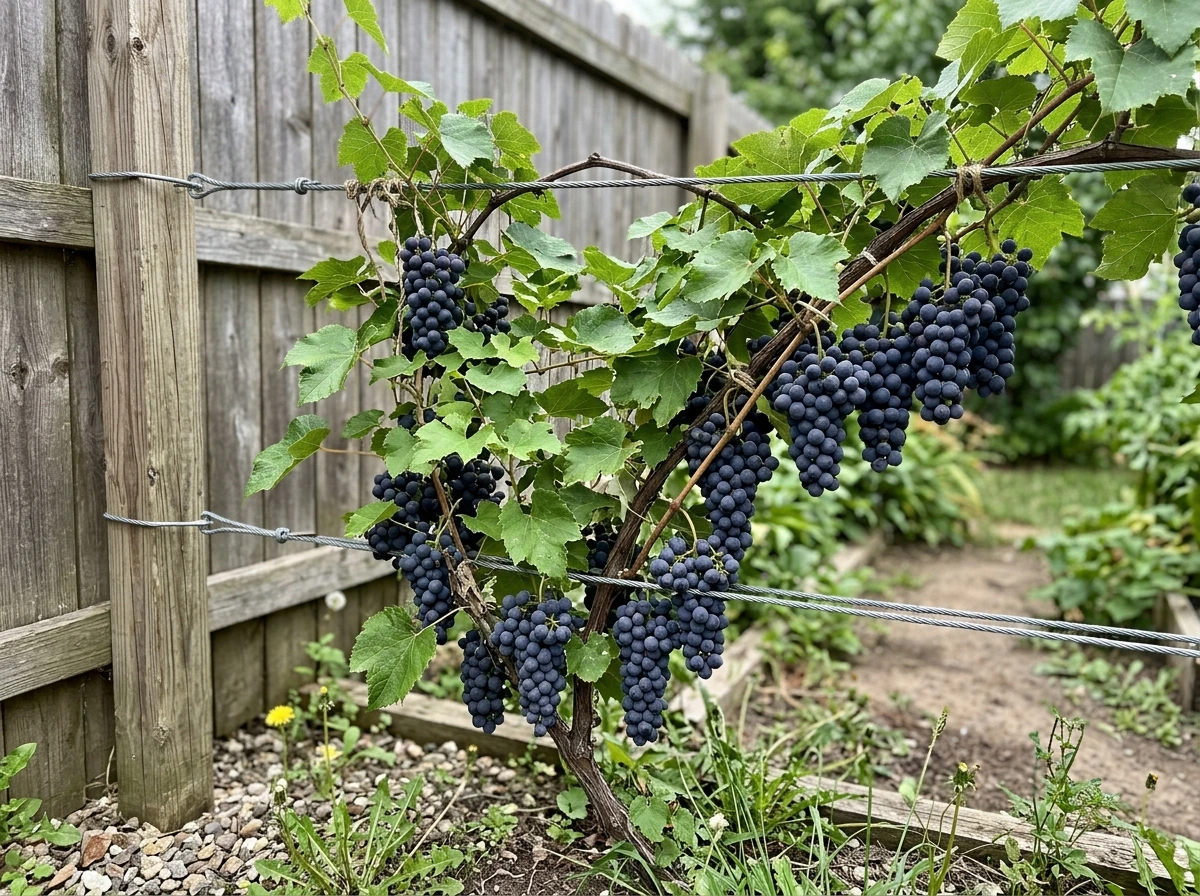
Grape vines don't just drape decoratively over a support. They produce fruit on one-year-old lateral growth, and a trellis is the framework that positions those shoots and fruiting canes so they get enough sun, airflow, and room to develop properly. Without structure, vines pile up on themselves, canopy density spikes, humidity builds, and disease follows. Penn State Extension puts it plainly: shade and humidity are the enemies of fruit quality. The trellis is your first line of defense against both.
Most home vineyard systems are two-dimensional and wire-supported. Think of a line of posts with wires running between them, not a fancy freestanding arch. That setup is easier to manage, easier to prune, and easier to harvest than most decorative alternatives. The two most common training approaches you will see in extension guidance are the vertical shoot positioning system (VSP, sometimes called the Guyot or two-cane Kniffen system) and the four-arm Kniffen. Both use the same basic trellis anatomy: end posts, line posts, and horizontal wires at defined heights.
For a standard VSP setup, the training wire sits at roughly head height and additional catch wires extend up to about six feet. A simpler two-wire Kniffen setup places the lower wire at 36 inches and the upper wire at 60 inches above ground. Either way, the goal is to keep the fruiting zone open to sun and air. In cooler regions where you want easier access for winter protection, a lower fan system or head-trained system may make more sense. More on that in the climate section below.
What to build your trellis from
You do not need to overthink materials, but you do need to use the right ones. Grape vines are long-lived and heavy. A trellis built from undersized lumber and cheap wire will sag, lean, and eventually fail under a mature vine's load.
Posts
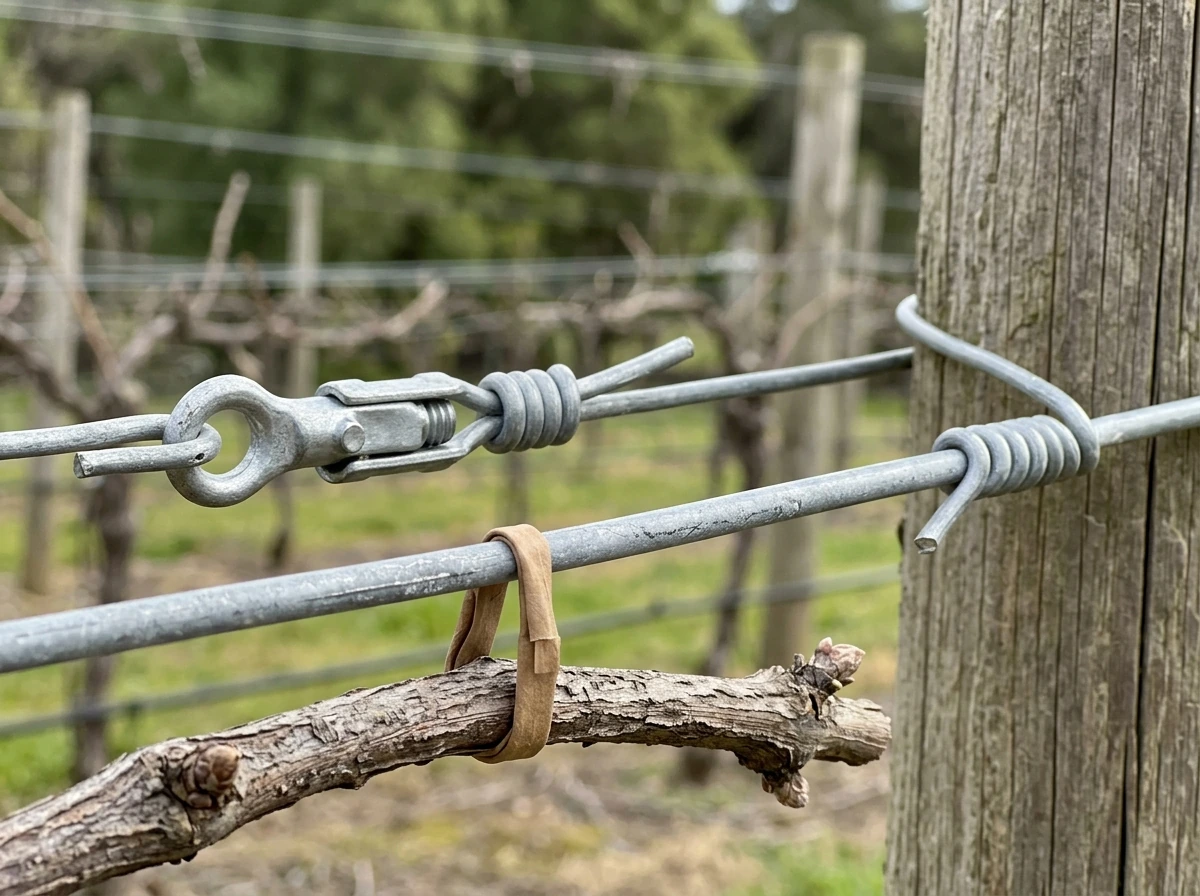
Use treated wood for line posts. Metal posts can work in a pinch, but attaching wires securely to metal is harder and tends to cause problems over time. Line posts should be about 3.5 to 4 inches in diameter. Most trellis setups use 8-foot posts set 2 to 3 feet into the ground, leaving 5 to 6 feet above the surface. End posts take the most load and need to be braced or anchored more firmly than the line posts between them.
Wire
Use 12.5-gauge high-tensile galvanized steel wire for any wire that carries vine weight. This is the standard used by serious home growers and small commercial operations alike. Add a turnbuckle or similar tensioning device at one end of each wire run so you can tighten it as the wire stretches over time. Wire that sags pulls your canopy out of position and creates the exact humidity and shading problems you are trying to avoid.
Fences, arbors, and walls
Existing structures can work if they are sturdy and well-positioned. A fan training system is specifically suited to walls, fences, and arbors, and it can look beautiful on a backyard fence. Just make sure the surface or structure faces the right direction for your location (south-facing in the Northern Hemisphere is ideal) and that it does not trap humidity against the vine. An arbor overhead is fine for ornamental purposes but makes disease management and pruning genuinely harder, so go in with realistic expectations if you go that route.
Muscadine grapes: a different setup
If you are growing muscadines in the Southeast, the standard VSP trellis is not what you want. University of Georgia Extension recommends a single-wire system for muscadines, with the wire and vine height set at 5 to 5.5 feet. Rows should be spaced 12 feet apart. Muscadines are vigorous and have a different growth habit than European or hybrid grapes, so the support structure needs to match. If you want more on where muscadines grow best, that is covered in a separate guide on where muscadine grapes grow.
Trellis system comparison
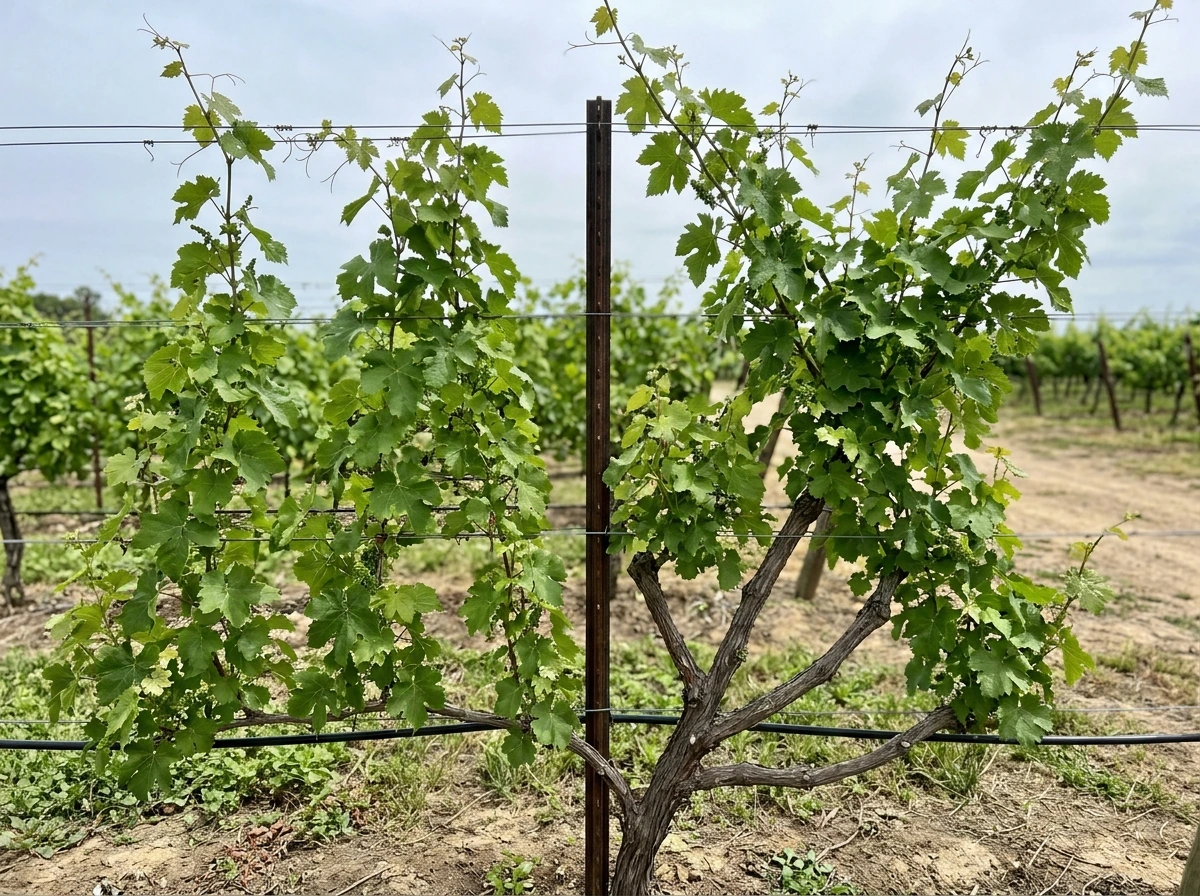
| System | Wire height(s) | Best for | Pros | Cons |
|---|---|---|---|---|
| Two-wire Kniffen | 36 in. and 60 in. | Vigorous American varieties, beginner setups | Simple to build and prune | Less canopy control, lower airflow |
| VSP / Two-cane Guyot | ~4 ft training wire + catch wires to ~6 ft | Hybrid and vinifera grapes, quality fruit focus | Excellent sun/airflow, easier disease management | More wires, more tying work |
| Fan system | Flexible to wall/fence height | Walls, fences, arbors, cold climates | Good for winter protection, decorative | Requires careful pruning to avoid crowding |
| Single-wire (Muscadine) | 5 to 5.5 ft | Muscadine grapes in the Southeast | Matches muscadine vigor and growth habit | Not suited to non-muscadine varieties |
For most home gardeners starting out with a hybrid or American-type grape, the two-wire Kniffen or a simple VSP setup is the right call. If you are in the Southeast growing muscadines, go straight to the single-wire system. If you are in a cold climate like Minnesota or upstate New York and worried about winter injury, a lower fan or head-trained system will make it easier to protect canes over winter.
Best plants to grow alongside grapes
Companion planting around grapes is not magic, but it is genuinely useful when you choose plants that match grapes' needs rather than fighting against them. The core principle is simple: grapes want full sun, good airflow, and reasonable soil fertility. Any companion you choose should support those conditions, not undermine them.
Herbs and flowers
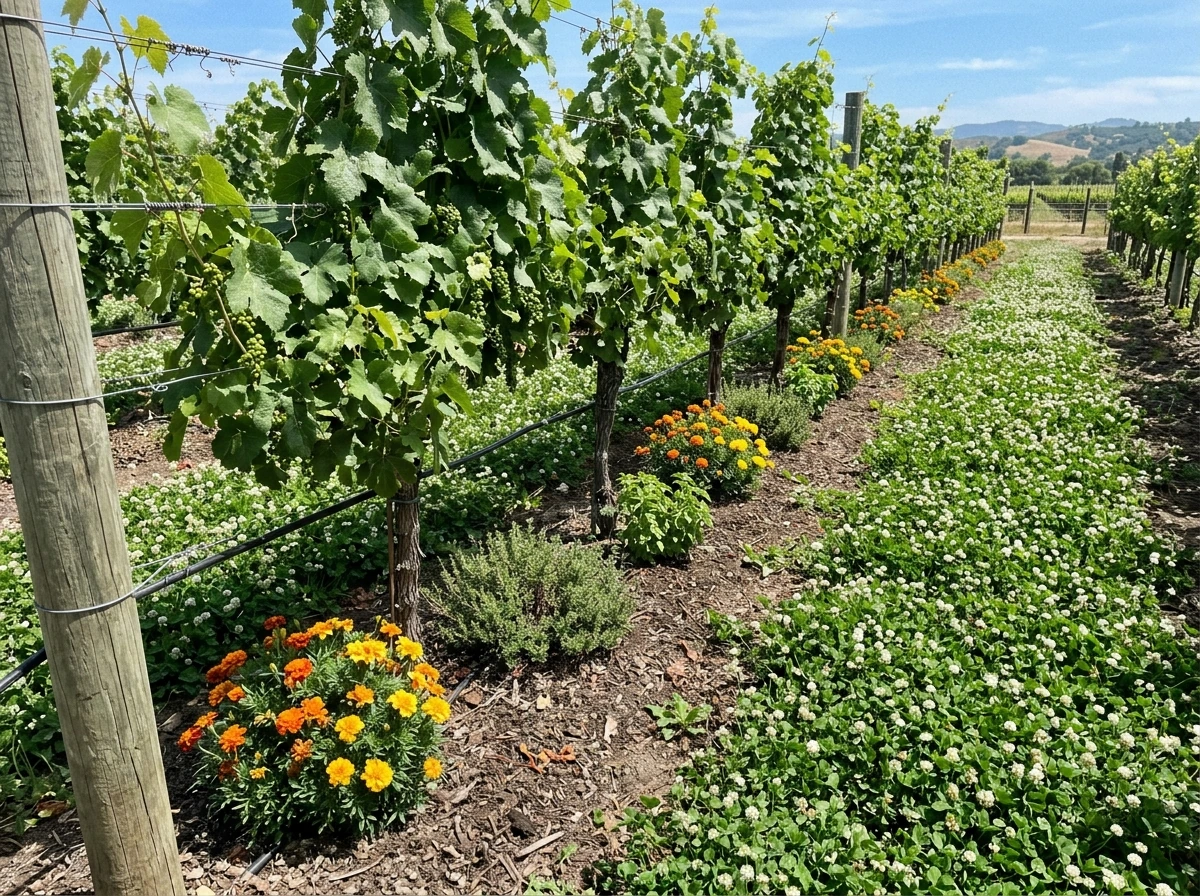
Marigolds, thyme, basil, and oregano are solid choices. They attract beneficial insects including pollinators and predatory insects that help keep pest populations in check. They stay low, do not compete aggressively for water or nutrients, and do not shade the vine canopy. Plant them along the row edges or at the ends of vine rows rather than directly under the canopy where they might interfere with airflow at the base of the trunk.
Legume groundcovers
Clover is a popular choice in home vineyards because it fixes nitrogen, improving soil fertility naturally over time. It also attracts pollinators and stays relatively low-growing. Keep it in the row middles rather than directly against vine trunks, and mow it periodically so it does not get thick enough to hold moisture around the base of plants.
What makes a companion plant work here
- Full-sun tolerant: companions that need shade will struggle anyway, and anything that creates shade to compensate hurts the grapes
- Low-growing or easily managed: keeps the fruit zone open and does not block airflow
- Attracts beneficial insects: pollinators and predators help both the vine and the garden
- Not a heavy feeder or aggressive spreader: grapes do not need competition for water and nutrients
What not to grow near grapes
This section is just as important as the companion planting list. A few common gardening choices can actively harm your vines, and some of them might surprise you.
Dense shade-creating plants
Any shrub, tree, or large plant that shades the fruit zone is a problem. Grapes need full sun for ripening, and a shaded canopy invites powdery mildew and downy mildew by reducing airflow and increasing humidity. UMN Extension is direct about this: high humidity promotes both types of mildew infection. Keep large woody plants well away from your trellis rows, and aim for a canopy height-to-row-width ratio of about 1:1 so rows are not shading each other.
Heavy-feeding vegetable crops
Corn, squash, and other heavy feeders planted close to grapevines compete directly for water and nutrients, especially in the critical establishment years. They can also create the kind of dense, humid microclimate that grapes hate. Save these crops for a different part of the garden.
Fennel
Fennel is allelopathic, meaning it releases chemicals into the soil that inhibit the growth of nearby plants. It is a classic bad neighbor in almost any kitchen garden, and that goes double for grapes. Keep it out of the vineyard area entirely.
Thick mulch at the base
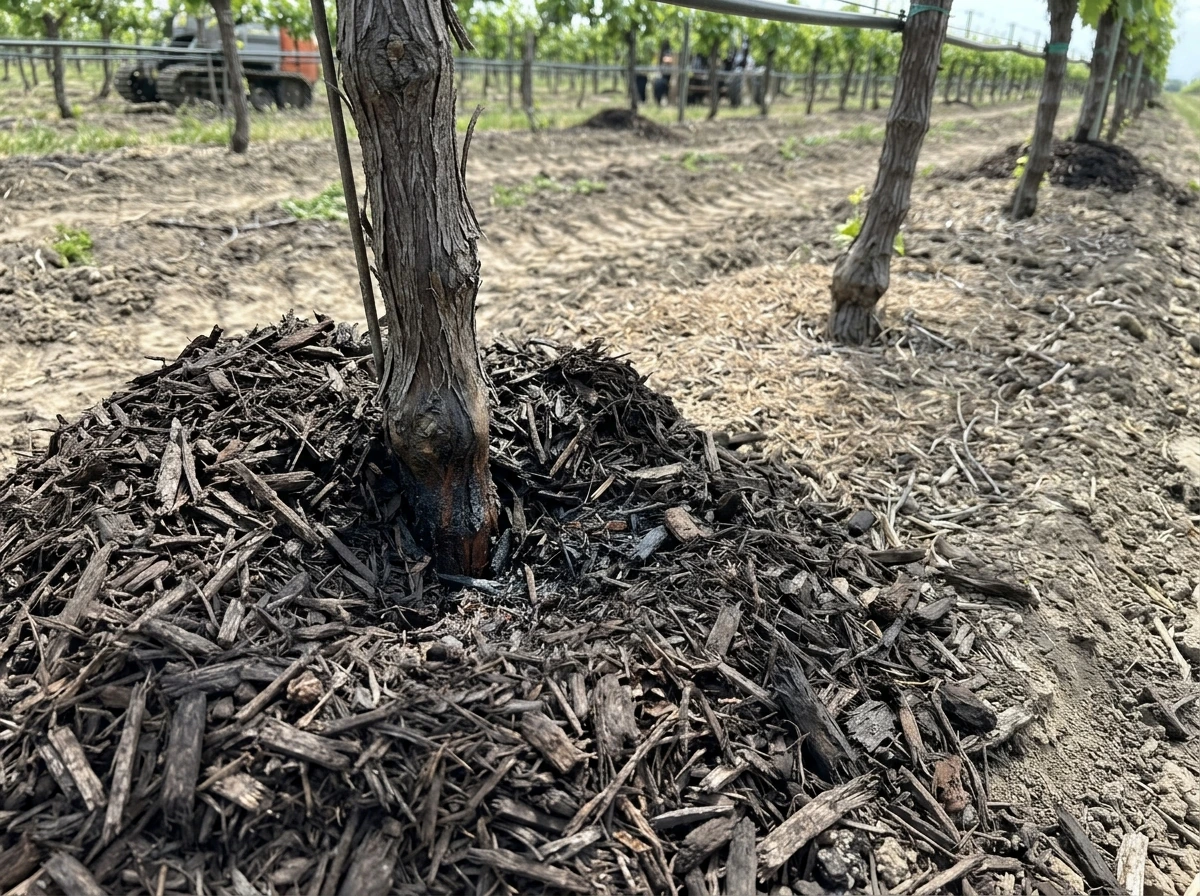
This one catches people off guard. UMN Extension specifically advises against mulching grapevines because thick mulch keeps soil temperature too cool, slowing establishment and root development. In cooler climates especially, you want the soil to warm up as quickly as possible in spring. Skip the deep wood-chip mulch you might use around other fruit plants.
Herbicide-treated areas
This is a real and underappreciated risk. Many common weed killers contain 2,4-D or dicamba, and grapes are extremely sensitive to both. If you or a neighbor spray a lawn product or broadleaf weed killer anywhere near your vines, even drift from a distant application can cause serious damage. UMN Extension specifically flags this. Know what is in any product you use near the vineyard, and communicate with neighbors if your vines are close to a property line.
How your region shapes the decisions you make
The right trellis height, training system, and companion choices all shift depending on where you live. There is no single setup that works from Minnesota to Georgia to the Pacific Northwest. Here is how to think about it by region.
Cold climates (Zones 4-5: Upper Midwest, New England, high-elevation areas)
Winter injury is your primary structural concern. Lower training systems like the fan, head-trained, or low-cordon systems let you lay canes down and protect them with mulch or burial over winter if needed. Choose cold-hardy hybrids (Marquette, Frontenac, Itasca, and similar UMN releases) and match your trellis height to their growth habit. Avoid thick mulch at the vine base in spring, since you want soil to warm fast. Companions that tolerate temperature swings and short seasons, like clover and hardy herbs, work well here.
Humid East and Southeast (Zones 6-8: Ohio, Virginia, the Carolinas, Georgia)
Disease pressure is your biggest challenge. Powdery mildew, downy mildew, and black rot all love the combination of warmth and humidity common in this region. A VSP or similar open-canopy system with good wire spacing is worth the extra setup effort because it maximizes airflow. Avoid anything that adds to canopy density or holds moisture near the vine. In the Southeast, muscadines are naturally adapted to this climate and thrive with much less disease management than European or hybrid grapes. More on variety selection for this region is covered in the guide on where grapes grow best.
Arid West (Zones 6-9: California, Utah, Arizona, New Mexico)
Sun and heat are assets here, and most European vinifera varieties do well if you can manage water. A VSP or cordon-based trellis is standard. The bigger concern is adequate irrigation and making sure companions do not compete for limited water. Low-water herbs like thyme and oregano are particularly well-suited as companions in this region. Avoid dense groundcovers that need regular watering and could create moisture problems at the soil surface.
Pacific Northwest (Zones 7-9: Western Oregon and Washington)
Rainfall and cool temperatures during spring and fall mean disease management and sun maximization are both priorities. VSP is the dominant commercial system here for good reason. Orient rows north-to-south to maximize sun exposure, and keep companions low and out of the fruit zone. OSU Extension strongly emphasizes full sun for ripening in this region, so any structure or companion that reduces light at the canopy is a real problem.
Your first-season plan: what to build and do right now
If you are starting this spring, here is the practical sequence to follow. Do not wait until everything is perfect to plant. Get the vine in the ground, get a stake in place, and build the full trellis around it during the first season. do cotton candy grapes grow naturally
- Choose your training system before you buy posts or wire. Match it to your climate, your variety, and how much labor you want to do at pruning time. Two-wire Kniffen for simplicity, VSP for disease management, single-wire for muscadines.
- Set your end posts first, brace them well, then run your line posts at 8-foot spacing. Use treated wood, 3.5 to 4 inches in diameter, set 2 to 3 feet deep.
- String your 12.5-gauge galvanized wire at the correct heights for your system (36 and 60 inches for Kniffen, or training wire at ~4 ft plus catch wires to ~6 ft for VSP). Add a turnbuckle at one end of each wire so you can tension it as it stretches.
- Plant your vine and immediately tie the strongest shoot to a training stake or twine running up to the first wire. The goal this year is a straight trunk and a strong root system, not fruit.
- If flower clusters form in year one, remove them. This feels counterintuitive, but redirecting energy to root development now pays off in years two and three.
- Plant companions (marigolds, thyme, clover) in the row middles or at row ends, not directly under the canopy or against the trunk.
- Do not apply mulch thickly at the vine base. If you want weed suppression, keep it thin and away from the trunk.
- Identify any herbicides used in the area. Do not allow 2,4-D or dicamba products anywhere near your vines, and put up a physical barrier or buffer if drift is a concern.
- By mid-summer, your vine should be approaching the first wire. Tie it loosely as it grows, and let it keep climbing. At the end of the season, you will prune back to the strongest trunk growth and begin training the cordon or canes in year two.
One thing worth repeating: the establishment year is about roots and trunk, not harvest. If you skip to fruit too fast, you will have a weak vine that underperforms for years. Be patient in season one and you will have a vine that rewards you for decades. If you are still working out which variety to grow in your state, If you are still working out which variety to grow in your state, the guides on where grapes grow best and where can grapes grow cover that in detail by region. cover that in detail by region. where do green grapes grow
FAQ
What do grapes grow on if I do not want to build a trellis right away?
You can start with a single stake and temporary ties to keep the first shoots upright, but plan to install the full wire framework during the first season. Grapes fruit on one-year lateral growth, so leaving them unsupported too long usually leads to tangled growth and a harder, messier pruning decision later.
Can grapes grow on a fence instead of a purpose-built trellis?
Yes, but only if the fence is strong enough to carry the wire tension and the vine has open airflow. If the fence traps humidity, you may need to create spacing between the vine and the surface using stand-off posts or choose a training system that keeps the fruiting zone exposed.
How high should the trellis be for grapes?
Many standard systems place the main fruiting wire around head height (about 5 to 6 feet total with additional catch wires depending on your setup). The key is that the fruiting zone stays accessible and sunlit in your yard, while excess vine growth stays above the shaded soil area to reduce mildew-prone humidity.
Do grapes need a wire-supported trellis, or can I use rope or wooden slats?
Wire is preferred because it holds tension and stays aligned as vines grow and mature. Rope and flexible supports stretch and shift, which quickly pulls the canopy out of position and increases shade and humidity, so if you substitute materials, plan for frequent re-tensioning and monitoring.
What happens if my wires sag or my trellis shifts over time?
Sagging wires force shoots and canes to bunch together, which reduces airflow at the fruiting zone and increases mildew pressure. It can also change the position of your fruiting canes, making pruning less predictable, so use tensioning hardware and recheck wire tightness in spring as growth restarts.
Can I grow muscadines on the same trellis system as European or hybrid grapes?
Usually not. Muscadines typically need a different structure and spacing (commonly a single-wire setup with the vine trained higher and wider row spacing). If you use a standard two-wire VSP for muscadines, you may end up with tangled growth and poor exposure for fruiting.
What should I grow alongside grapes if I am trying to minimize pest problems without adding competition?
Choose low, sun-tolerant plants that do not require heavy irrigation near the vine base, and keep them out of the trunk area. The goal is to support beneficial insects while avoiding dense groundcover that holds moisture or competes for water and nutrients during establishment.
Is clover a good idea everywhere for grapes?
Clover can help with nitrogen and pollinator support, but it works best when you manage its growth so it does not become thick and moisture-holding at the base. In wetter or cooler climates where disease pressure is high, mow more frequently and keep clover in the row middles rather than against the trunks.
What is the biggest mistake people make with trellis training in the first year?
Waiting for “perfect” conditions or trying to rush toward fruit before the vine has strong roots and a trunk. In season one, focus on getting the training system installed and directing shoots correctly, then expect performance to improve as the vine matures in later seasons.
Do grapes need mulching, and what kind of mulch is safest?
Thick mulch around grapevines can delay spring soil warming and slow establishment, especially in cooler regions. If you use mulch at all, keep it minimal near the trunk and avoid deep wood-chip layers that stay cold and damp during early growth.
Can herbicide drift damage grapes even if I am not spraying the vines directly?
Yes. Grapes are highly sensitive to certain broadleaf weed killers, and even off-target drift can cause serious harm. If neighbors use lawn products, communicate early and keep a clear buffer zone, since wind can carry droplets farther than you expect.
How far should I plant other crops from grapevines if I want to avoid competition?
Keep heavy feeders and water-hungry crops away from the vineyard row, especially in the establishment years. Even if they seem “close enough,” shared root zones can reduce grape vigor and create a humid microclimate, so dedicate the row area and its immediate margins primarily to grapes and low companion plants.
What training system should I choose if I expect winter protection needs?
If you anticipate laying canes down for protection, choose a lower or fan-type system that makes it easier to cover, mulch over, or otherwise protect canes. Match the trellis height to the cold hardiness and growth habit of your specific variety so you do not end up with unprotectable cordons.