
Grapes grow best [where summers are long and warm](/grape-habitat-and-types/where-do-green-grapes-grow), winters are cold but not brutal, humidity is manageable, and the soil drains freely. do cotton candy grapes grow naturally That sounds simple, but the real answer depends on your specific location, your microclimate, and which varieties you plant. The good news: grapes are far more adaptable than most people assume. With the right variety and a well-chosen planting spot, you can grow productive vines across most of the continental United States, and in much of southern Canada, too. what do grapes grow on
Where Do Grapes Grow Best: Climate, Site, and Variety Guide
Marcus Whitfield
24 Mar 2026
What grapes actually need to thrive
Before you can figure out whether your backyard works, you need to know what a grapevine is looking for. These aren't vague preferences. They're measurable thresholds, and checking them is step one.
Growing season length and heat accumulation
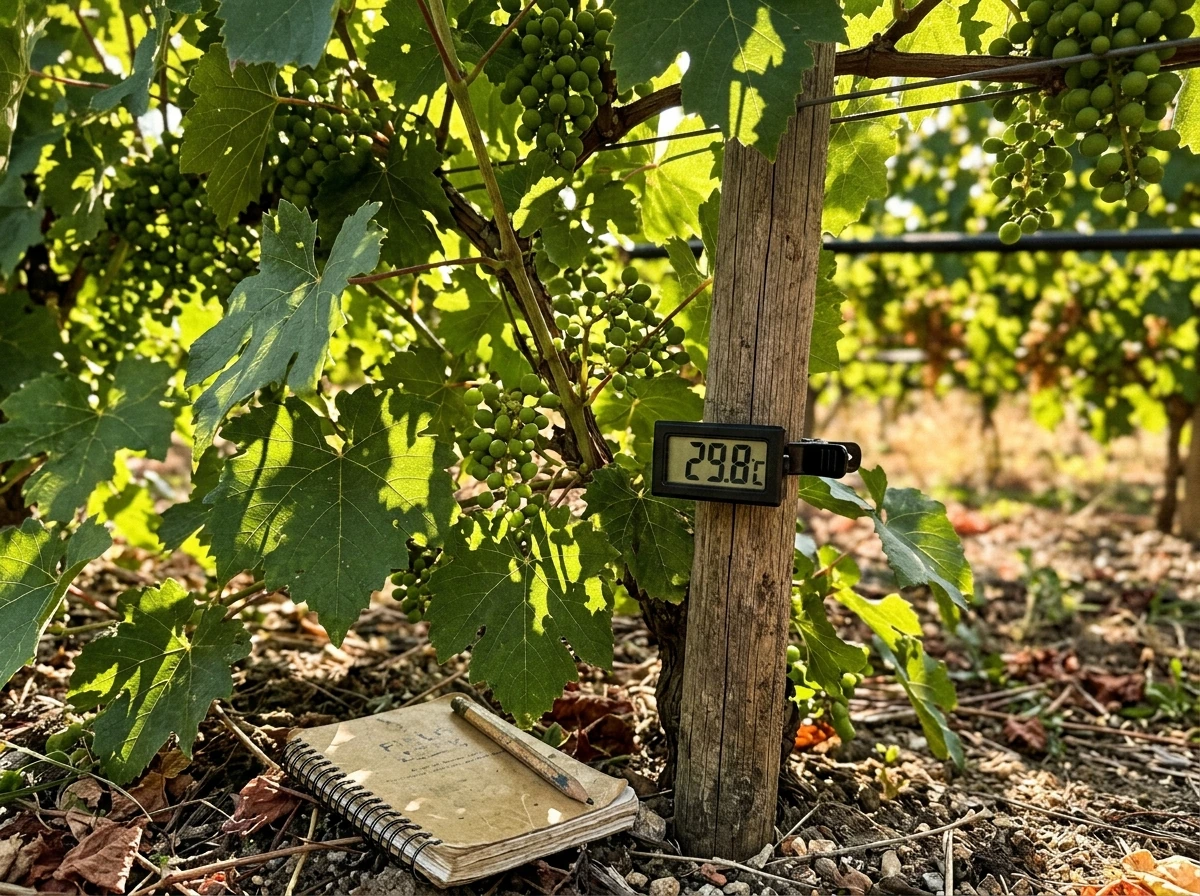
Grapes need enough heat over the growing season to ripen their fruit. Viticulturalists measure this using Growing Degree Days (GDD), calculated as: ((daily high + daily low) / 2) minus 50°F, summed from April through October. The Winkler Index classifies climates into five regions based on this number: Region I is the coolest (under 2,500 GDD), suitable for early-ripening varieties like Pinot Noir or Riesling, and Region V is the hottest (over 4,000 GDD), where late-ripening varieties like Grenache or Thompson Seedless thrive. Most home gardeners in temperate zones fall somewhere in Regions II through IV, roughly 2,500 to 4,000 GDD. If your season consistently falls below 2,000 GDD, European wine grapes will struggle to ripen, and you'll want to focus on early-ripening hybrid varieties.
Winter cold and cold hardiness limits
Winter cold is often the single biggest factor for home growers outside of California and the Pacific Northwest. European Vitis vinifera varieties (Cabernet, Chardonnay, Merlot, etc.) have bud cold hardiness down to roughly -5°F under good conditions. Push below that regularly, and you're risking bud kill or vine death every few years. An average extreme minimum temperature of -8°F is often cited as an ecological boundary for vinifera viability without special protection. Interspecific hybrids, the cold-hardy crosses developed at universities like Minnesota, Cornell, and Nebraska, can handle -10°F to -30°F depending on the variety. This is why someone in Iowa can grow Marquette or Frontenac successfully while their neighbor's Cabernet Sauvignon gets wiped out each winter.
Frost-free days and spring frost timing
Grapes need at least 150 frost-free days, and many wine grape varieties need 180 or more. Spring frosts are especially tricky because they can kill tender new shoots after the vine has already budded out. Cold hardiness is partially genetic, but bud burst timing matters just as much. A variety that pushes out early in spring in your climate is more frost-vulnerable than one that waits until mid-May. Oregon State Extension specifically flags growing degree days and frost-free days as the two primary climate metrics for matching cultivars to a site, and they're right.
Soil drainage and pH
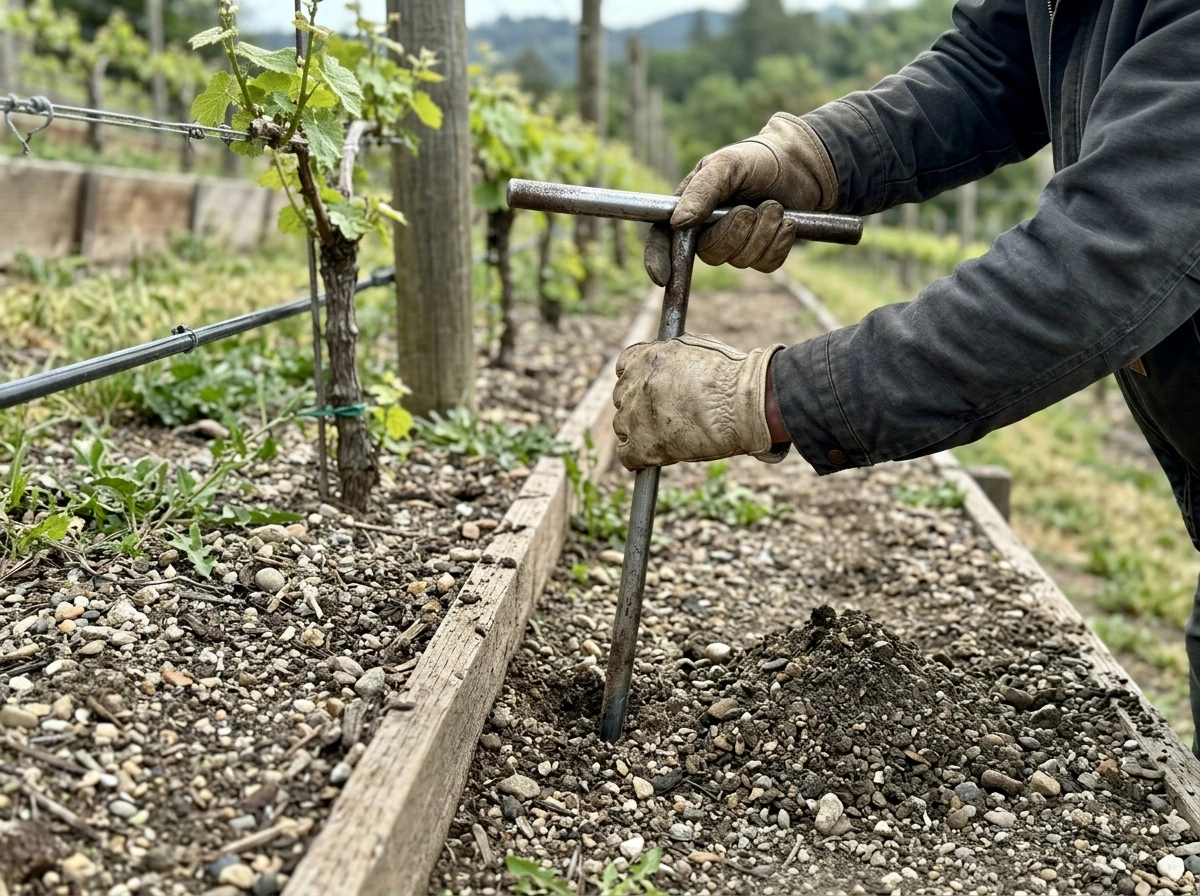
Grapes genuinely hate wet feet. Waterlogged roots suffocate vines and invite root diseases. You want well-drained soil, ideally with a pH between 5.5 and 6.5. Sandy loam, gravelly loam, and rocky hillside soils all work well. Heavy clay that stays wet in spring is a problem you'll fight constantly. If you're on clay, raised beds or a sloped planting site can help enormously. Fertility matters less than drainage; many famous wine regions grow outstanding grapes on soils that most vegetable gardeners would consider poor.
Humidity and disease pressure
High summer humidity dramatically increases disease pressure from downy mildew, powdery mildew, and botrytis. This is why the humid Eastern U.S. is harder for European grapes than the dry West. It's not impossible, but it requires disease-resistant varieties and attentive management. Airflow through the canopy, achieved through good vine spacing and consistent pruning, is your primary tool for drying leaves and reducing fungal pressure. OSU Extension specifically calls out proper spacing and pruning as critical for exactly this reason.
Where vineyards and wine grapes grow best by climate type
There are a handful of climate types where grapes consistently thrive, and understanding which one matches your region tells you a lot about your baseline odds.
| Climate Type | Where You'll Find It | Suitability | Best Grape Types |
|---|---|---|---|
| Mediterranean (dry summers, mild winters) | California Coast, parts of Pacific Northwest | Excellent for vinifera; ideal GDD and low disease pressure | Cabernet, Chardonnay, Pinot Noir, Zinfandel |
| Semi-arid continental (warm summers, cold winters) | Eastern Washington, parts of Oregon, high-elevation West | Very good; irrigation often needed; cold hardiness matters | Riesling, Syrah, Merlot, Cabernet Franc |
| Humid continental (warm summers, cold winters, humid) | Great Lakes region, Midwest, parts of Northeast | Moderate; vinifera at risk; hybrids perform well | Marquette, La Crescent, Frontenac, Concord |
| Humid subtropical (hot humid summers, mild winters) | Southeast U.S., Gulf Coast | Challenging for vinifera; muscadines excel | Muscadine varieties, Carlos, Noble, Nesbitt |
| Cool coastal / oceanic (mild temps, cool summers) | Pacific Coast outside California, parts of New England | Limited heat accumulation; early-ripening varieties only | Pinot Noir (select sites), Marechal Foch, Baco Noir |
| High plains / mountain (short season, wide temp swings) | Rocky Mountain foothills, Northern Plains | Difficult; cold-hardy hybrids and short-season vinifera only | Frontenac, Marquette, Brianna, St. Croix |
Mediterranean climates produce the most reliably excellent wine grapes in the world, and California's Central Coast, Napa, and Sonoma valleys are the clearest examples in the U.S. But that doesn't mean everyone else is stuck. The Great Lakes region in Michigan, Ohio, and New York has produced outstanding Rieslings and hybrid reds for decades. The Southeast has muscadines that thrive where European varieties simply cannot. Matching the climate type to the right variety class is the whole game.
Region-by-region guidance for home growers
Here's how to think about your specific part of the country. This isn't exhaustive, but it covers the main situations most home gardeners are dealing with.
California and the Pacific Southwest
You're in the sweet spot. Most of California's inland valleys accumulate 3,000 to 4,500 GDD, winters are mild enough for vinifera, and summer humidity is low. Coastal areas run cooler, which is actually ideal for Pinot Noir and Chardonnay. The main challenge here is choosing the right variety for your specific valley or slope, not whether grapes will grow. Nearly any vinifera variety can succeed somewhere in California. Check your local GDD range and match to the Winkler region table above.
Pacific Northwest (Washington, Oregon, Idaho)
Eastern Washington and southern Oregon wine country are outstanding for vinifera, combining warm growing seasons with cold, dry winters that rarely dip below the vinifera damage threshold. Western Oregon and the Willamette Valley are cooler and wetter, ideal for Pinot Noir and early-ripening whites. Western Washington west of the Cascades is the toughest call, with limited heat accumulation and wet summers pushing you toward disease-resistant hybrids or cold-hardy varieties. If you're east of the Cascades, you're in genuinely great grape country.
Great Lakes states (Michigan, Ohio, New York, Pennsylvania, Wisconsin)
The Great Lakes moderate temperatures dramatically, and the best vineyard sites sit close to the water where freeze events are buffered. Lake Erie's south shore (Ohio, Pennsylvania, New York), the Finger Lakes in New York, and northern Michigan's Old Mission and Leelanau Peninsulas all have legitimate vinifera production. Away from the lake influence, vinifera becomes a gamble and cold-hardy hybrids like Marquette, Frontenac, La Crescent, and Noiret become your best tools. Penn State's cold hardiness risk assessment tool is genuinely useful here, letting you compare forecasted minimum temperatures against the LT50 thresholds (the temperature at which 50% of buds are killed) for over 50 cultivars.
Midwest and Great Plains (Minnesota, Iowa, Nebraska, Kansas, Missouri)
Cold winters are the defining challenge. Minnesota and northern Iowa regularly see -20°F or colder, which is beyond even the hardiest hybrid varieties without burial or careful siting. The University of Minnesota program has developed varieties like Marquette, Frontenac, and La Crescent specifically for these conditions, and they're genuinely productive. Nebraska's wine industry has grown significantly around cold-hardy hybrids. Missouri, especially in the Ozarks, can support some vinifera on favorable south-facing slopes. The -8°F average extreme minimum temperature boundary for vinifera is a useful quick check: if your USDA zone regularly pushes below that, plan on hybrids.
Southeast and Gulf Coast (Georgia, Alabama, Mississippi, Louisiana, Florida, Carolinas)
Hot, humid summers and mild winters create a very specific challenge. European grapes suffer badly from disease pressure and often don't get the winter chilling hours they need. Muscadine grapes (Vitis rotundifolia) are native to the Southeast and genuinely excellent here: varieties like Carlos, Noble, and Nesbitt thrive where nothing else will. If you're in the upper South, the Carolinas and northern Georgia at higher elevations, you can sometimes grow certain French-American hybrids and even some cold-hardy reds. But muscadines are your sure bet in the deep Southeast. There's a full guide to where muscadine grapes grow if that's your situation.
Texas and the Southwest
Texas Hill Country has a legitimate wine industry built around Spanish and Italian varieties that handle heat well, like Tempranillo and Sangiovese. The elevation keeps temperatures reasonable, and the low humidity helps. The Gulf Coast region is muscadine territory. Arizona at elevation (4,000 feet and above) can support vinifera. The main enemies in the southern Southwest are extreme summer heat above 100°F for extended periods and Pierce's Disease, a bacterial vine killer spread by sharpshooters that is endemic in areas with hot summers and mild winters.
Northeast (New England, New York, New Jersey, Virginia, Maryland)
Virginia and Maryland have a real and growing wine industry, mostly built on vinifera and French-American hybrids at well-chosen sites. New York's Hudson Valley and Long Island are warmer than inland areas. New England gets challenging quickly as you move north, with short seasons and cold winters. The rule here is: the closer to the coast and the further south, the more options you have. Maine, Vermont, and New Hampshire home growers should plan on cold-hardy hybrids and accept that it takes careful siting to pull it off.
Picking the right variety for where you live
Once you know your climate type and region, variety selection comes down to three practical questions: Does the variety ripen before your first fall frost? Can it survive your coldest winters? And can it handle your summer humidity without becoming a disease management nightmare?
Matching ripening time to your season
Grape varieties are typically labeled early, mid, or late season. In a short-season climate (fewer than 160 frost-free days), you need early-ripening varieties like Frontenac, Marquette, Brianna, or Marechal Foch that finish by late September. In a long-season warm climate, you have the luxury of late-ripening varieties like Cabernet Sauvignon, Mourvedre, or Zinfandel. Getting this wrong is one of the most common mistakes I see new growers make: planting a late-ripening variety in a short-season location, then watching the grapes freeze on the vine in October.
Cold hardiness: what the numbers mean
Bud cold hardiness is expressed as an LT50 value: the temperature at which 50% of buds are killed. For Vitis vinifera, that threshold is typically around -5°F to -10°F depending on variety and how well the vine acclimated going into winter. Interspecific hybrids from university breeding programs range from about -10°F to -30°F or colder. Michigan State Extension rightly points out that cold hardiness is not just genetics: management practices like late-season nitrogen reduction, proper canopy management, and timing of dormancy entry all affect how hardy your vines actually are in any given winter. Plan around your average extreme minimum, but build in a buffer.
Disease resistance in humid climates
If you're in a humid region, disease resistance should weigh as heavily in your variety choice as cold hardiness. Varieties like Marquette, Frontenac Gris, Noiret, Corot Noir, and Traminette have been bred with significant resistance to powdery mildew and downy mildew. That doesn't mean zero spraying, but it means the difference between a manageable spray program and a constant losing battle. Pure vinifera in the humid East requires a full fungicide program; factor that in honestly before you commit.
| Variety | Type | Cold Hardiness | Best Region | Season Length |
|---|---|---|---|---|
| Marquette | Hybrid (U of MN) | −36°F | Upper Midwest, Northeast | Early to mid |
| Frontenac | Hybrid (U of MN) | −30°F | Midwest, Great Lakes, Northeast | Early to mid |
| La Crescent | Hybrid (U of MN) | −30°F | Midwest, Great Lakes | Early |
| Concord | Native American | −20°F | Northeast, Midwest | Mid |
| Cabernet Franc | Vinifera | −5°F to −10°F | VA, NY, Great Lakes (lake sites) | Mid |
| Riesling | Vinifera | −5°F to −10°F | Pacific NW, Great Lakes, NY | Mid to late |
| Cabernet Sauvignon | Vinifera | −5°F | CA, Eastern WA, TX Hill Country | Late |
| Muscadine (Carlos, Noble) | Vitis rotundifolia | 10°F to 15°F min | Southeast U.S. | Mid |
| Tempranillo | Vinifera | 0°F to −5°F | TX Hill Country, CA, NM | Mid to late |
Finding the best spot on your own property
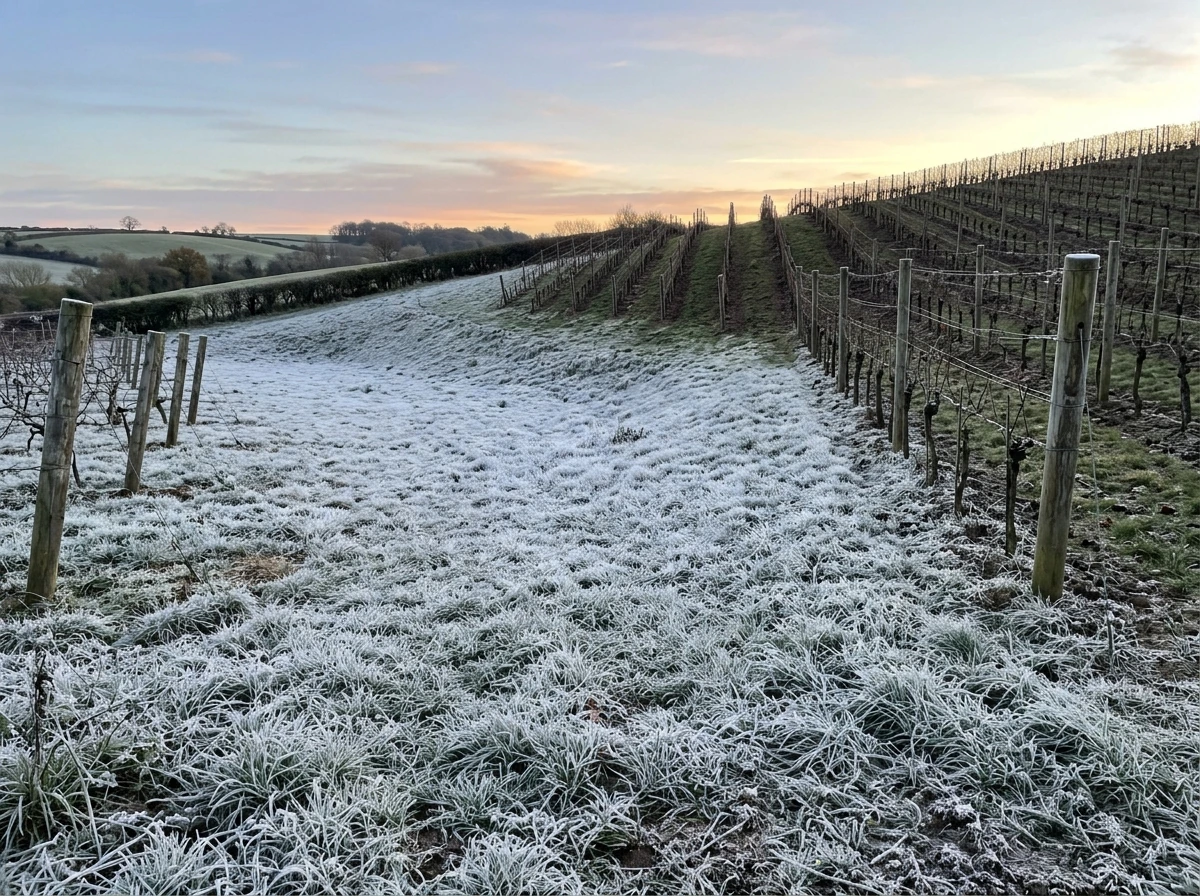
Even within a favorable region, your specific planting site can make or break a vineyard. A great variety in the wrong spot on your property will underperform a mediocre variety in a well-chosen one.
Cold-air drainage: the factor most people overlook
Cold air is dense and flows downhill, pooling in low spots, valleys, and depressions on still, clear nights. This is exactly where damaging spring frosts and late-fall freezes happen. If you plant your vines at the bottom of a hill or in a low-lying area, you're choosing the coldest, most frost-prone spot on your property. UC ANR's vineyard guidance makes this a primary checklist item, and rightly so. A mid-slope position, where cold air drains past and around the vines rather than pooling at them, is almost always better than a valley floor. This one factor can account for 3 to 5 degrees of minimum temperature difference, enough to move you from vine damage to vine survival.
Slope, aspect, and sun exposure
South-facing slopes receive the most direct sun in the Northern Hemisphere, warming faster in spring and accumulating the most heat over the season. In cool climates, a south-facing slope can add hundreds of effective growing degree days compared to a flat or north-facing site, which is often the difference between ripening a variety and not. In hot climates, a slight east-facing aspect can actually be beneficial, giving morning sun and some afternoon shade to prevent overheating and sunburn on fruit. Whatever the aspect, you want at least 8 hours of direct sun per day. Anything less, and you'll struggle with poor ripening and disease.
Wind protection without trapping frost
Grapes benefit from protection from prevailing cold winds, especially from the north and northwest in most U.S. locations. A windbreak, whether a hedge, fence, or tree line, can protect vines and improve site temperatures. The catch is that you don't want that windbreak to block cold-air drainage and create a frost pocket. A permeable windbreak, like a mixed hedge rather than a solid fence, reduces wind speed while allowing cold air to pass through. Position windbreaks upwind of the prevailing cold wind direction, not on the downhill side where they'd trap cold air.
Spacing, trellis, and airflow
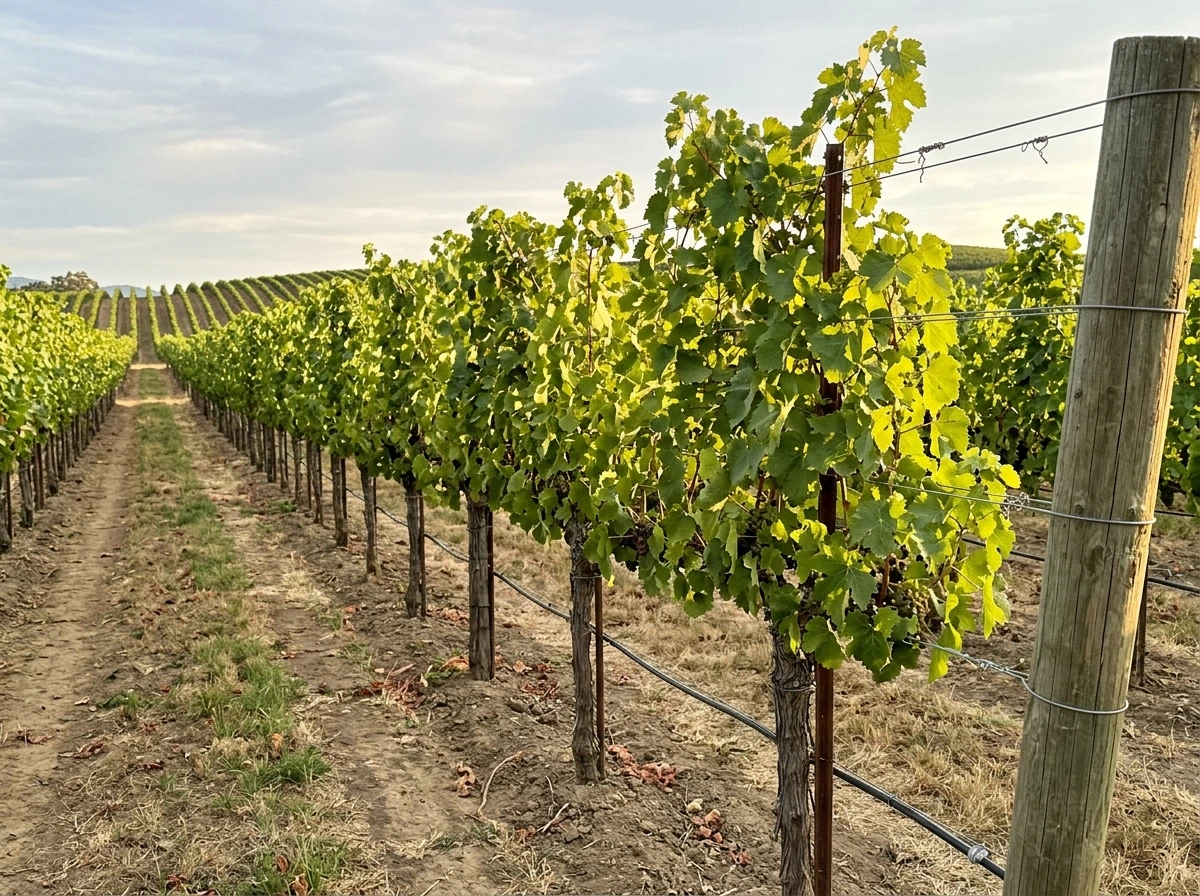
In humid regions especially, row orientation and vine spacing directly affect disease pressure. Rows oriented north-south receive sun on both sides through the day, drying leaves and fruit faster after rain. Wider row spacing and vertical shoot positioning, where shoots are trained upward rather than drooping, maximize airflow through the canopy. OSU Extension specifically calls this out: proper spacing and pruning are your main tools for drying leaves and reducing fungal disease. Don't plant more vines than you can keep properly pruned and trellised.
Practical next steps you can do today
You don't need to spend months researching before you act. Here's a concrete sequence to get from curious to confident in a few focused hours.
- Look up your average last spring frost date and first fall frost date using NOAA's climate data site or your county extension office. Count your frost-free days. Under 150 means you're seriously limited; 160 to 180 opens most hybrid options; over 180 gives you serious vinifera potential.
- Find your average extreme minimum winter temperature. The easiest shortcut is your USDA Plant Hardiness Zone map. Zone 5 and colder (below -20°F) means cold-hardy hybrids only. Zone 6 (-10 to 0°F) opens up some hardier vinifera with site selection. Zone 7 and warmer means most vinifera are viable if other conditions are right.
- Estimate your GDD. You can calculate it yourself from historical weather data, or use the free Winkler Index calculators available from university extension services. This tells you which Winkler Region you're in and which varieties can ripen before your frost.
- Walk your property and identify potential planting sites. Look for south or southeast-facing ground, mid-slope positions, and areas that drain freely after rain. Avoid low spots, north-facing slopes, and anywhere that stays visibly wet for days after a rain.
- Check soil drainage with a simple percolation test: dig a hole 12 inches deep, fill it with water, and see how fast it drains. Well-drained soil empties within 2 to 3 hours. Slow drainage (still full after 6 hours) signals a problem. Test soil pH with an inexpensive kit or through your county extension office.
- Pick two or three candidate varieties from the variety table above that match your cold hardiness zone, season length, and disease pressure situation. Contact your state's Cooperative Extension service (free) to confirm these are recommended for your area. Most states have viticulture specialists who answer exactly these questions.
- If you're in a colder or higher-humidity region, look up the Penn State Cold Hardiness Risk Assessment tool and plug in your candidate varieties against your historical minimum temperatures. This tells you the real bud injury risk you're taking on.
- Order bare-root vines for spring planting from a reputable nursery in late winter to early spring. Quality planting stock from certified-virus-free sources matters. Expect vines to take 2 to 3 years to produce their first real harvest. Year one and two are about root establishment, not fruit.
The honest summary is this: grapes grow best where heat accumulates steadily through a long frost-free summer, winters are cold but not extreme, humidity is low enough to keep disease manageable, and the soil drains freely. That describes large parts of the U.S., not just California. If you pick varieties bred for your actual conditions, plant on the best-drained, sunniest, mid-slope site you have, and give the vines two or three seasons to establish, you have a genuinely good shot at productive vines wherever you are. The biggest mistakes are planting the wrong variety for your winters or ignoring drainage and cold-air flow on your site. Fix those two things, and most of the hard work is done.
FAQ
If my town is in a good grape region, why do my vines still struggle to ripen?
Microclimate usually explains it. Low spots pool cold air, late-day shade reduces effective heat, and wind exposure can slow growth. Check your vineyard spot’s sun hours and avoid planting directly in a valley or north-facing slope, even if the overall region has enough Growing Degree Days (GDD).
How can I estimate whether I have enough heat (GDD) without sophisticated tools?
Use your local weather station’s historical highs and lows to approximate daily averages, then compare your season’s total to a Winkler Index range. If you cannot access station data, a simple proxy is whether your variety typically ripens before your first fall frost in nearby vineyards with similar exposure.
What’s a practical way to handle spring frosts if I cannot change my site?
Choose varieties with later bud burst when possible, and consider practical frost protection like covering small vines with row cover during the coldest nights or using wind machines in larger plantings. The key is to protect new shoots after bud break, not just the dormant vine.
Do grapes need very specific soil pH, or is drainage more important?
Drainage matters more for vine survival, but pH still influences nutrient availability. Staying roughly within pH 5.5 to 6.5 helps prevent common issues like reduced uptake of potassium and micronutrients, especially in soils that are otherwise workable but not ideal.
My soil is heavy clay. Is raised beds always the best fix, or are there other options?
Raised beds help, especially if you keep water from pooling, but you can also improve drainage with deeper soil ripping and careful grading to move runoff away from the root zone. Avoid planting at the bottom of a slope, because even improved clay will stay saturated longer there.
How far apart should vines and rows be for disease control in humid climates?
Follow spacing targets tied to airflow, not just plant count. Wider rows and good vertical training (keeping shoots up and leaves off the damp ground) reduce leaf wetness time, which lowers downy mildew and botrytis risk. If you want a concrete starting point, aim for a canopy you can reach for pruning and spray coverage without bunching.
Can I grow European wine grapes in a humid East without spraying?
It’s usually unrealistic for consistent results. Disease-resistant hybrids can reduce spraying, but pure vinifera still tends to require a managed fungicide program to prevent season-ending infections. If you want minimal-input gardening, prioritize hybrid varieties bred for powdery and downy mildew tolerance.
What happens if winter temperatures dip slightly below my variety’s limit?
Bud kill can be partial or severe, and the damage may show up unevenly as weak or absent fruiting shoots the next spring. To reduce the risk of a total crop failure, plan for a buffer above your site’s average extreme minimum and consider management practices that improve acclimation before winter.
How do I choose between early-, mid-, and late-ripening varieties for my location?
Anchor the decision to frost timing and your local season length. If you get fewer than about 160 frost-free days, prioritize early ripeners that finish before late September, then avoid late varieties that may freeze in fall. If you are near the boundary, choose a mid-season variety and accept slightly lower yields rather than risking crop loss.
What should I do about Pierce’s Disease if I’m in a hot southern or Southwest area?
Plan around risk rather than hoping the site will be “fine.” Pierce’s Disease is spread by sharpshooters and can be endemic in hot, mild-winter areas. Use region-appropriate vine material, monitor for vector pressure, and do not assume that a warmer-than-average microclimate alone eliminates the problem.
Does row direction (north-south vs east-west) matter if I already have good drainage and sun?
Yes, especially for humid climates. North-south rows tend to improve drying because both sides of the canopy get sunlight at different times through the day, reducing leaf wetness duration after rain. The benefit works best when combined with proper spacing and pruning.
If my neighbor grows grapes successfully, can I just copy their variety and trellis setup?
Not always. Even within the same yard or neighborhood, differences in cold-air drainage, slope position, and sun exposure can change results. Match variety to your coldest-winter risk and ripening window first, then copy trellis practices as a second step.
How long should I wait before judging whether my grape site is truly “good enough”?
Give vines two to three seasons to establish before making a final decision. In the first year, growth can be slow due to root establishment, pruning training, and adjustment to soil and airflow. By the second and third seasons, you’ll see whether ripening, bud survival, and disease pressure match what the climate suggests.